
Over the years, we have had the Seaside Magazine team share their favourite holiday recipes, or friends “battle” friends to come out on top with their preferred Christmas cookie. Food is always a wonderful way to bring family, friends and neighbours together, and no time more so than during the holiday season.
This year, we thought we would reach out to locals to share seasonal favourites from their background and around the world. What better time to try something new? We hope you enjoy. Thank you to our contributors for sharing.
Marzipan
Words & Photo Leah Hayward, Smør Scandinavian Bakery
For many folks, Christmas just isn’t complete without the sweet, almondy taste of marzipan. In much of Scandinavia, it’s Christmas tradition to hide a single blanched almond in a pot of creamy rice porridge, and the person who finds the almond gets to eat a marzipan pig!
Although most Canadians associate marzipan with Christmas, it is enjoyed year-round in Scandinavia. It’s used widely in traditional baked goods like Danish kringle, Norwegian kransekake, and the iconic green dome and pink rose atop Sweden’s princess cake. It’s often sculpted into decorative figurines or fruits, or rolled out and draped over cakes. It pairs well with chocolate, so it’s also common to see chocolate-dipped marzipan fingers or shapes.
Marzipan might seem fancy, but it’s actually surprisingly easy to make! Here’s the recipe we use in our bakery in Sidney.
Ingredients
- 250g almond flour (2 ½ cups)
- 250g icing sugar (2 cups)
- 10g almond extract (1-2 tsp to taste)
- 50g corn syrup (2 Tbsp)
- water as needed (usually around 25g or 1-2 Tbsp)
- *Optional: food colouring as desired
Instructions
Mix all ingredients in a food processor until there are no dry patches left and the mixture looks like wet crumbs. Empty the mixture onto the counter and knead by hand until it’s smooth and soft. If it’s sticky, use icing sugar (NOT flour) to dust the counter. For storage, wrap in cling film and store in an air-tight container in the fridge. For best texture, use at room temperature.
Calabrese Zeppole (Savoury Fritter)
Words & Photo Lucia White
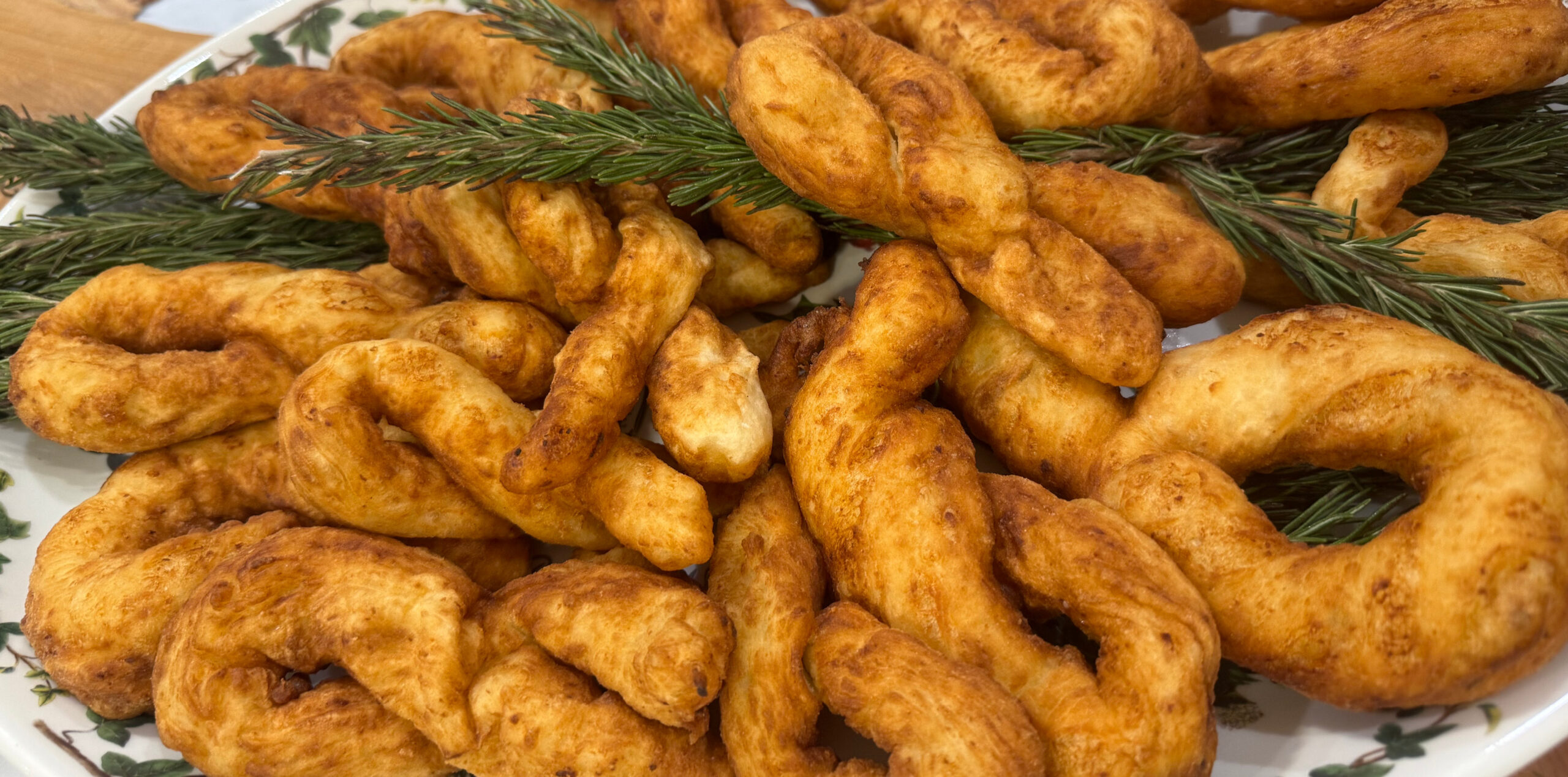
Growing up in an Italian household, these savoury, pillowy-soft fritters were a staple at Christmas time and other special occasions! My favorite were zeppole with anchovies, but there were also plain donut-shaped zeppole for those that don’t fancy a fishy taste.
Zeppole are a fried doughnut made with riced potato and flour and originating in Naples. The inclusion of mashed potatoes in the dough results in a doughnut that is exceptionally soft, light, and tender. It is often associated with Carnevale and St. Joseph’s Day.
Zeppole are sometimes called cuddrurieddri, also known as a poor man’s street food because of the simple ingredients! Call them what you want – they make the perfect appetizer for a traditional Italian holiday family gathering .
Ingredients
(makes 10-15 zeppole)
- 8-9 oz potatoes, boiled and riced (about 3 small potatoes)
- 4 cups flour
- 1 tbsp dry yeast
- 1/2 tsp salt
- 2 cups warm water (110°)
- 1 small tin anchovies, drained and dried (optional)
- 4-5 cups vegetable oil for frying
Instructions
- Combine warm water with yeast. Let stand for 5 to 10 minutes minutes until it bubbles.
- Add flour, riced potato and salt and mix well. The dough should resemble pizza dough but a little more sticky. Let rise for approximately 1 hour.
- Heat oil to 350°, test with a little piece of dough. Have a bowl of water handy to soak fingers so that the dough doesn’t stick to your hands.
- If you are using anchovies, dry them on a paper towel so that they are not greasy and the dough sticks and closes when you fold it. Otherwise it will open up when frying.
- Soak your fingers in the bowl of water and grab some dough with your hands. If you are not using anchovies, make rings or bow shapes by grabbing the dough, stretching and making an opening in the middle, then place them in the fryer.
- If you are using anchovies, wet your gingers and grab the dough. Lay it flat in your hand, place anchovy in the middle, then grab one end and flip over. Grab another end and flip over – keep stretching and flipping dough until you have covered the anchovy. Make sure the zeppole is sealed and you don’t see any anchovy poking out.
- Fry until the underneath is golden, then flip and remove once hard on outside and golden. Let rest on a paper towel to soak the excess oil.
Best served hot! Place just-fried Zeppole on a paper towel to absorb excess oil. Keep warm for that just-fried taste.
Allison’s Great-Great Grandmother’s recipe for Yorkshire Pudding
Words Alexandra Galloway
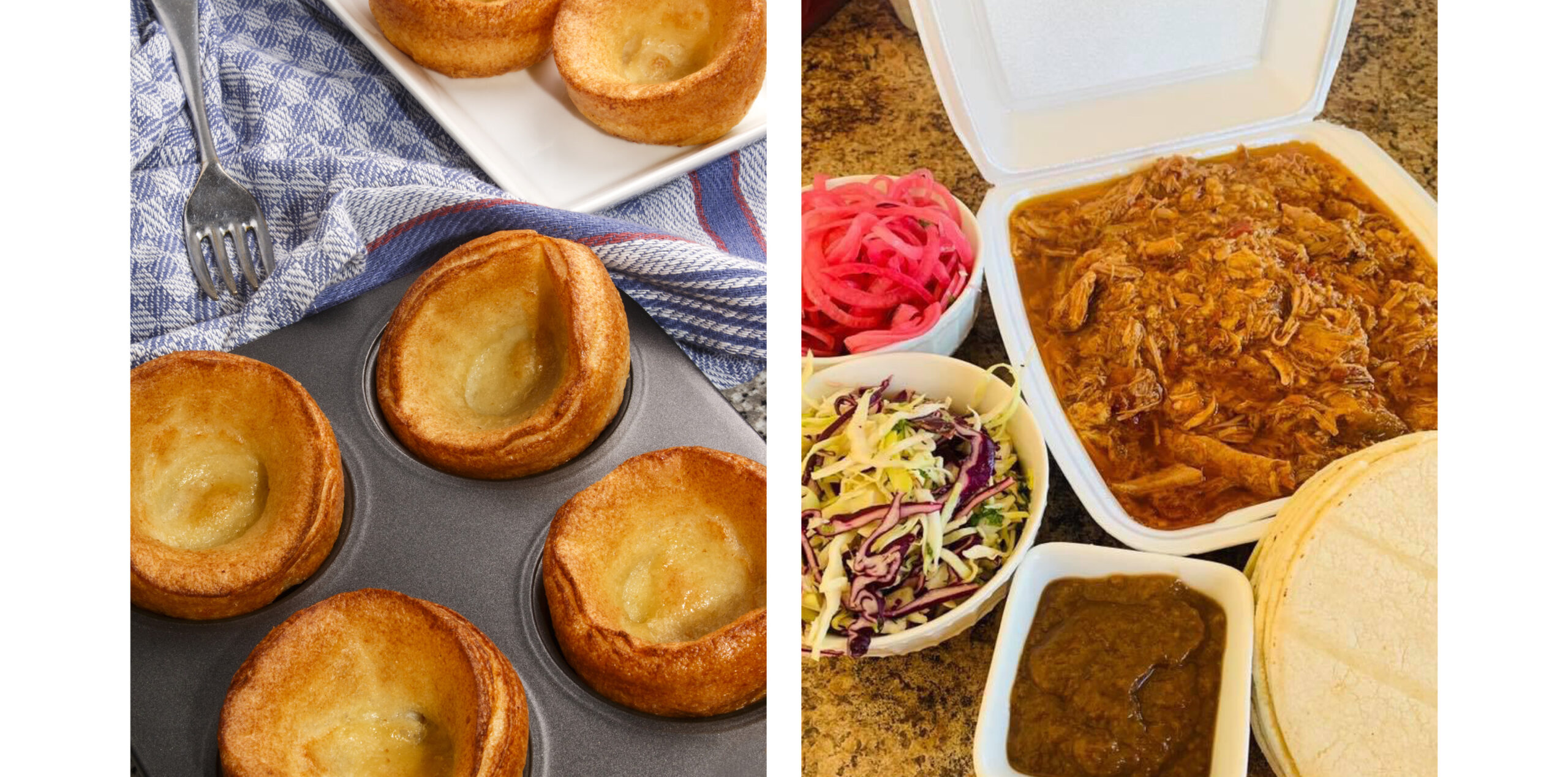
When I married Allison’s dad (yes, Allison, Seaside’s Editor-in-Chief!) I didn’t know how to cook! His mother was a very accomplished chef, who did a lot of entertaining. When I attempted to cook my first roast beef dinner, she gave me this recipe; it was a very old family tradition.
I’m not sure how the roast turned out, but I was amazed to see my Yorkshire puddings! I have used this recipe over and over again through the years, and my family now think of me as the Yorkshire Pudding Queen … thanks Margaret Smith!
Ingredients
(makes 10-12)
- 1 cup flour
- ¾ tsp salt
- 2 eggs
- ½ cup milk
- ½ cup water
- vegetable oil as needed
Instructions
- In blender: sift flour and salt. Make hole in centre and drop in eggs. Blend on high.
- Slowly add milk and water. Blend on high and let stand at least one hour.
- Pre-heat oven to 400°. Prepare Yorkshire pudding or muffin pan with ¼ inch vegetable oil in each cup. Or, if you are making a roast, use 1 tbsp roast drippings in each cup. Place pan in oven for at least 15 minutes to get really hot.
- Pour batter in each cup (about ¾ full), cook for 20-30 minutes – until puddings have puffed right up and turned golden brown.
- Tip: Make this early in the day and hit the blender for a few seconds several times during the day.
Cochinita Pibil
Words & Photo Kattia Graham, Kattia’s Kitchen
Cochinita Pibil is especially meaningful to me, as I am originally from the south of Mexico, where this preparation is traditional. It is a truly emblematic recipe – flavourful, versatile and loved by both kids and adults. The cooking method, known as the “Pib,” comes from our ancient Mayan ancestors in southern Mexico. It’s a traditional underground oven technique where the meat is wrapped in fresh banana leaves, giving it a naturally juicy texture and a unique blend of smoky, citrusy, and earthy flavors that make this dish so special.
We are happy to share this recipe with you!
Ingredients
- 1 kg (2.2 lb) pork shoulder or pork butt, cut into large chunks
- 100 g (3.5 oz) achiote paste
- 1 cup sour orange juice (or a mix of orange and lime juice)
- 3 cloves garlic
- 1 tsp oregano
- 1 tsp cumin
- salt and pepper to taste
- banana leaves (optional but traditional)
- pickled red onions for serving
Instructions
- In a blender, combine the achiote paste, sour orange juice, garlic, oregano, cumin, salt and pepper. Blend until smooth.
- Marinate the pork with this mixture for at least 4 hours (overnight is best).
- Line a baking dish with banana leaves (if using), place the marinated pork inside, and cover with more banana leaves and foil.
- Bake at 325°for about 3 hours, or until the meat is tender and can be shredded easily.
- Serve with pickled red onions and warm corn tortillas.