Words Rebecca Golat, Wildlife Biologist
Photo Mitchell Ogilvie
The American kestrel is the smallest falcon in North America, roughly the size of a robin, but what it lacks in size it makes up for in personality and flash.
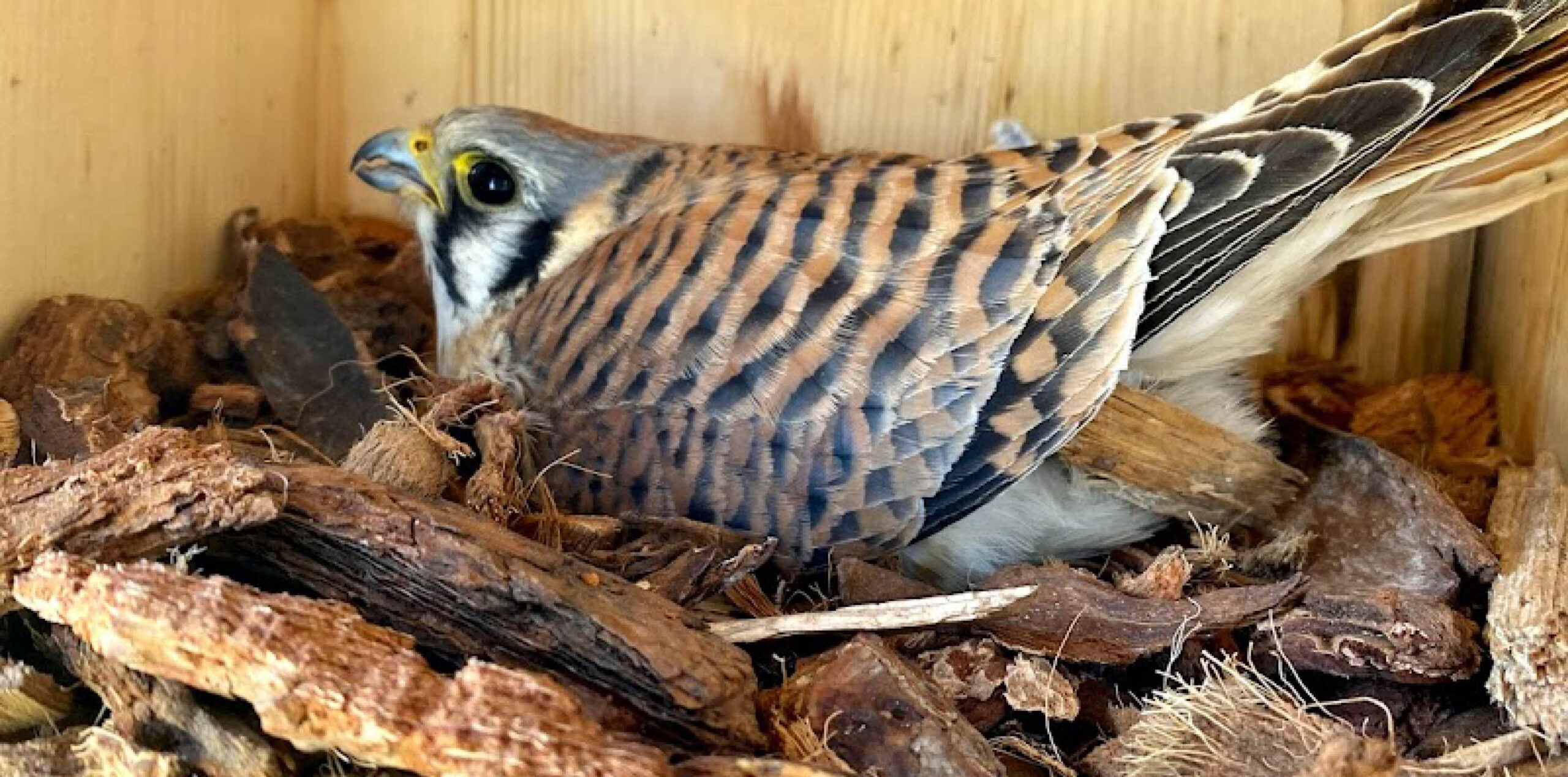
One of Vancouver Island’s most colourful birds of prey, males sport blue wings, rusty-red backs and tails, and bold black facial stripes, while females are larger and more orange overall. Surprisingly, these tiny falcons are more closely related to parrots than to hawks and eagles, something you might notice if you see one up close, bobbing its head as it curiously watches you from its powerline perch.
Kestrels thrive in open landscapes where grasslands and farmland are dotted with trees, fences and powerlines. From these vantage points, they scan the ground for prey, swooping down to catch insects, small rodents, reptiles and even other birds. This varied diet makes kestrels valuable ecological allies, especially in agricultural settings where they help control pest populations. Because they occupy the middle of the food web, kestrels also serve as living indicators of ecosystem health.
Across much of North America, these indicators are flashing warning signs. Data from the Breeding Bird Survey shows that American kestrel populations have been declining steadily since the 1970s, with particularly pronounced losses in Canada. Habitat change and pesticide use are major factors, along with the loss of natural nest sites.
And yet, on Vancouver Island, kestrels may be showing greater resilience than in other regions. One possible factor is the rise of introduced European wall lizards, now common in many parts of the southern Island. These small lizards are easy to spot in backyards, basking in the sun during warmer months. While scientists are still unsure what impact this introduced species may have on native ecosystems, they could provide kestrels with a plentiful food source during the breeding season. More research is needed to understand how kestrels are using this prey and whether it is helping stabilize local populations.
Kestrels face another challenge familiar to Vancouver Islanders: a housing shortage. Unlike many birds of prey that build their own nests, kestrels are secondary cavity nesters, relying on existing holes rather than constructing nests themselves. With standing dead trees increasingly removed, natural nest sites are scarce, creating a real housing crunch for these small falcons. The good news is that kestrels adapt well to human activity and readily use artificial nest boxes, offering them a practical solution to this modern nesting problem.
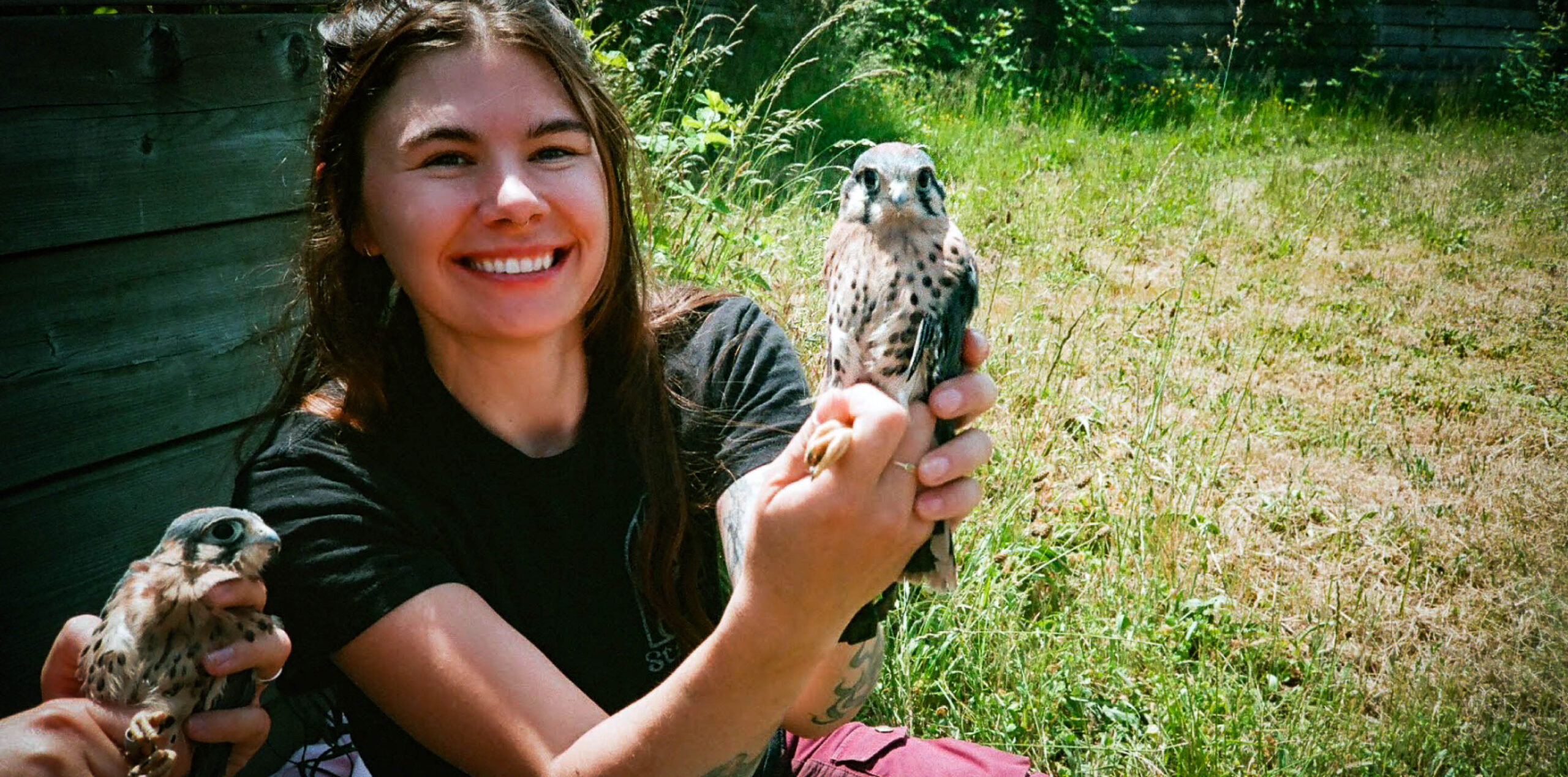
In 2020, during the COVID-19 pandemic, I kept busy by building and installing 20 kestrel nest boxes around the Saanich Peninsula. I worked with local farmers, landowners and businesses, many of whom were happy to welcome some free pest control onto their properties. The project is now being revitalized through the South Island Bird Research Network, run by Samuelle Simard-Provençal, Trentön Franco and myself. The network advances community-focused bird research in partnership with Special Bird Service, a club that amplifies the voices and perspectives of people of colour and the 2SLGBTQ+ in the natural world. Our goal is to provide accessible field training and workshops that help build ethical bird research skills, particularly for marginalized people and students who face financial or social barriers to traditional training pathways.
This year, students monitoring the kestrel nest boxes will gain hands-on experience in field monitoring, banding and handling raptors, and installing nest cameras to observe diet. These experiences equip young biologists with practical skills and a deeper understanding of bird ecology, and contribute valuable data to track kestrel populations on Vancouver Island.
To learn more and get involved, follow the South Island Bird Research Network (@sibrn_birdresearch) and Special Bird Service (@specialbirdservice) on Instagram for updates on events, workshops, and field opportunities.
The future of the American kestrel on Vancouver Island depends not only on research, but on people. By paying attention, sharing space, and staying connected, we can help ensure this small falcon continues to thrive on the Island.