
Words Jo Barnes
Photos Sarah Hartley Photography
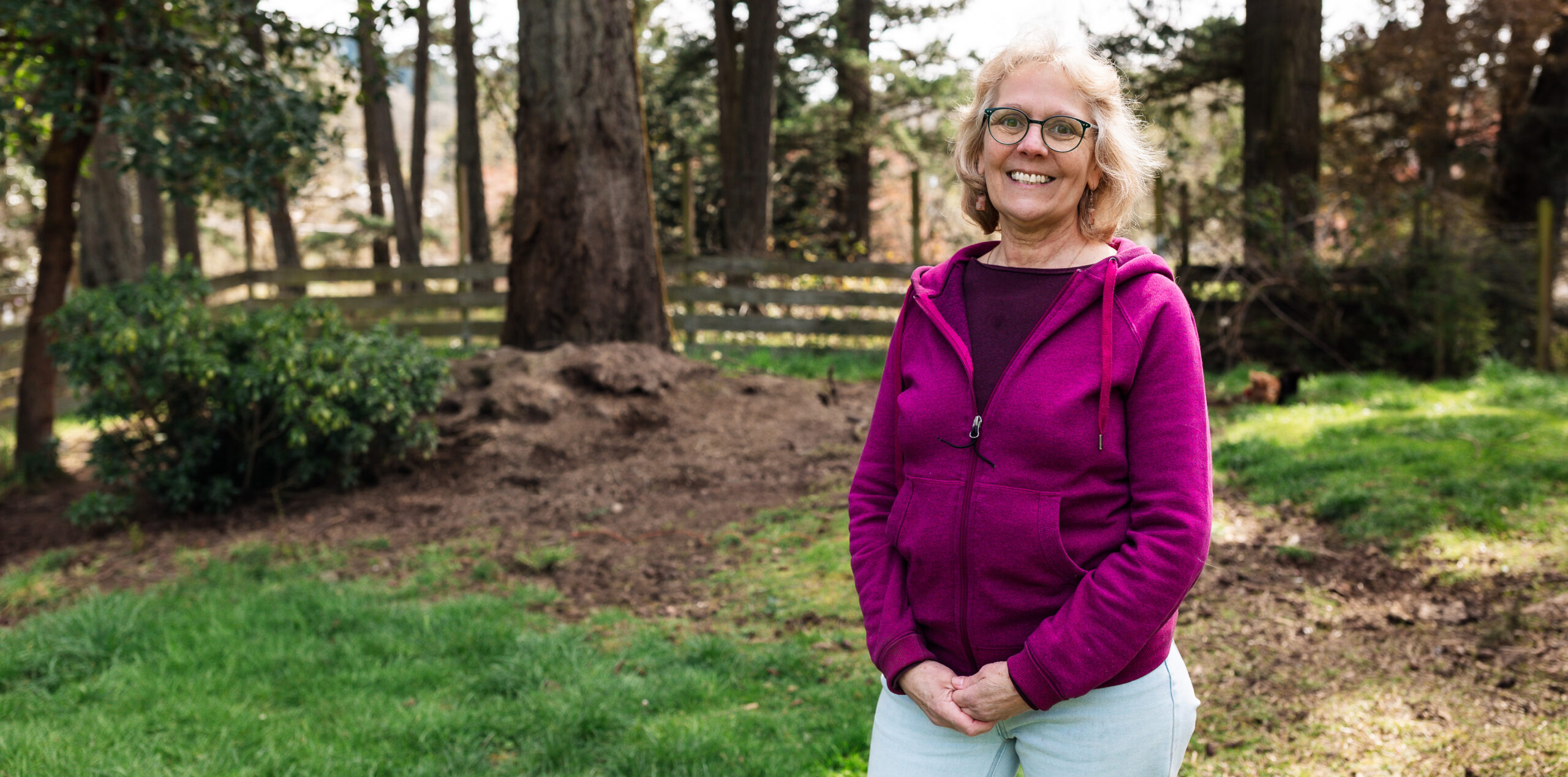
On Black Dirt Farm in Saanich, Denise McMorris has found a method of soil enhancement that works like a “char”-m.
The farm uses familiar sustainable practices, but one unique approach involves the application of burnt wood called biochar.
Biochar has been gaining attention in recent years. Basically, it’s a charcoal material that is rich in carbon and long lasting with benefits that include better water retention and nutrient conservation and enhanced plant resilience. Biochar is extremely porous, has a stable protective structure that allows a healthy microbial community sheltered from environmental stresses. Wood is burned to the point of charcoal but not ash.
“I came across this article in National Geographic one day about the richest farm soil on the planet. It goes back thousands of years and is called Terra Preta which, in Portugese, means ‘black soil.’ The dark colour is due to the charcoal in the soil,” shares Denise. “My farm name is partly from this, but I changed it to Black Dirt. I mimic the old practices of adding charcoal to the soil.”
Biochar is commercially available, but some growers are making their own version. “We have been using the pit method. Wood is burned to the point of charcoal, not ash, in a covered pit,” relates Denise. “We then incorporate it into the soil.”
While Denise has tried the pit method, she continues to explore other approaches. One factor that is key to the process, however, is the wood itself. “We are considering building a barrel unit rather than using the pit method. The barrel we intend to use is a 55-gallon drum made of metal,” she comments. “We have accumulated an amount of branches and logs from winter tree damage and intend to use that when it is drier. Also, we know it’s important to be careful to use only untreated wood so that you avoid contaminants.”
A sustainable approach is foundational to this farm where recycling and regenerative practices are valued. For example, empty whiskey barrels are collected, cut and made into planters for sale. “We don’t till here, and we avoid sprays and chemicals,” she notes. “We use the layered lasagna method in composting. Leaf mulch, green waste, hay and the biochar is all part of the mix.”
For Denise, farming is second nature as she grew up on a farm. “I love farming; it comes naturally. I was raised on a dairy farm in Aldergrove. There were cows, chickens, pigs and a large garden,” she relates. “I’m from a large family, and we all worked on the farm.”
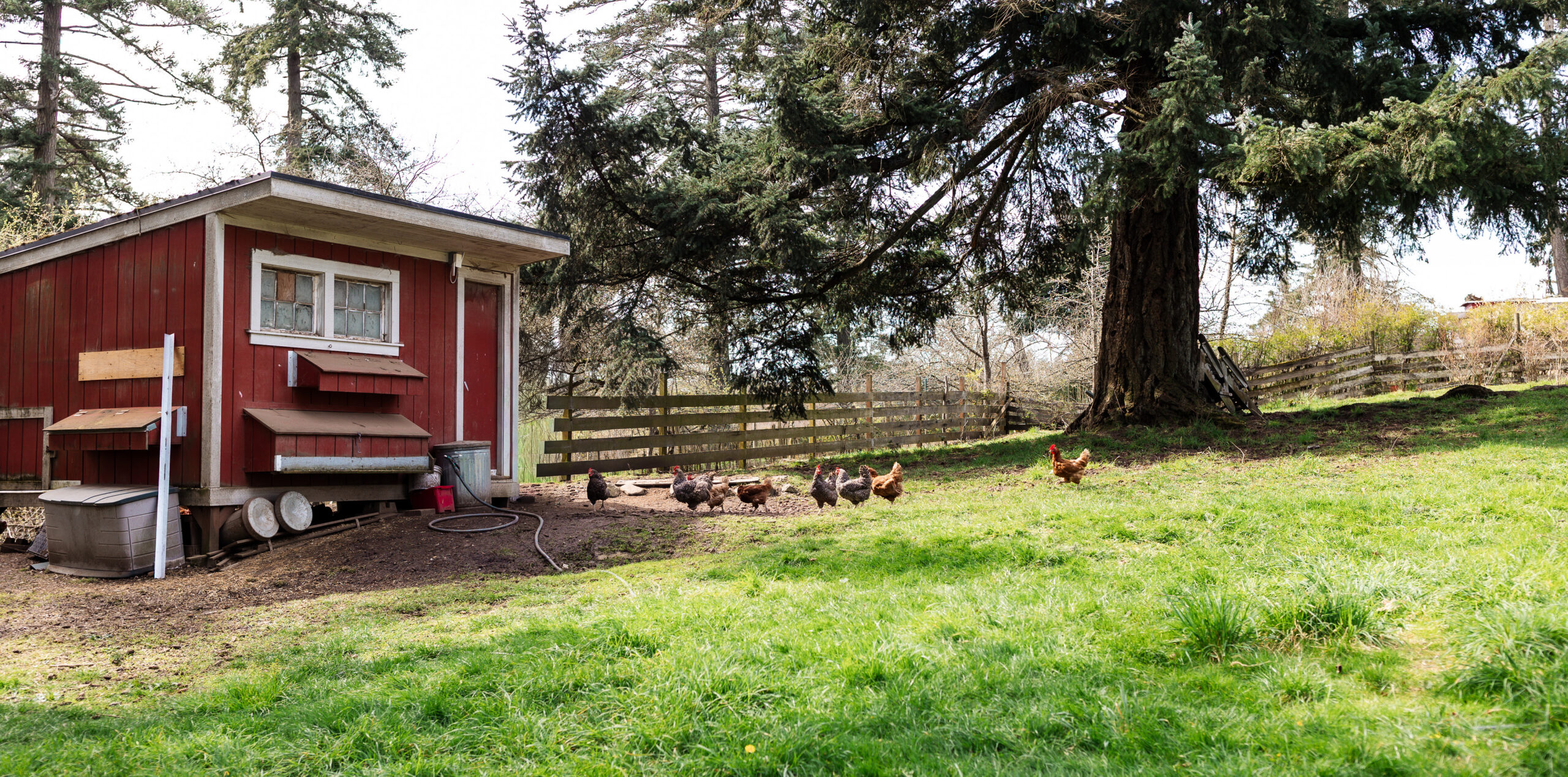
Originally purchased in 2010, the 4.75-acre property is home to heritage chickens raised for egg production, an orchard and a vegetable and herb garden. The enriched soil allows the farm to boast a harvest that is marketed in whole form or made into jams, pickled items and herbal tinctures, oils and body products, all of which is sold at various local farmers’ markets.
However, even the best soil and abundant harvest need many hands to make it all happen. “My youngest son Kevin and his partner Emmie now live on property, and they help out with the farming. They love the chickens and take wonderful care of them,” says Denise. “My son drives me to the markets and they both help with set up. My daughter Dana also creates product labels.”
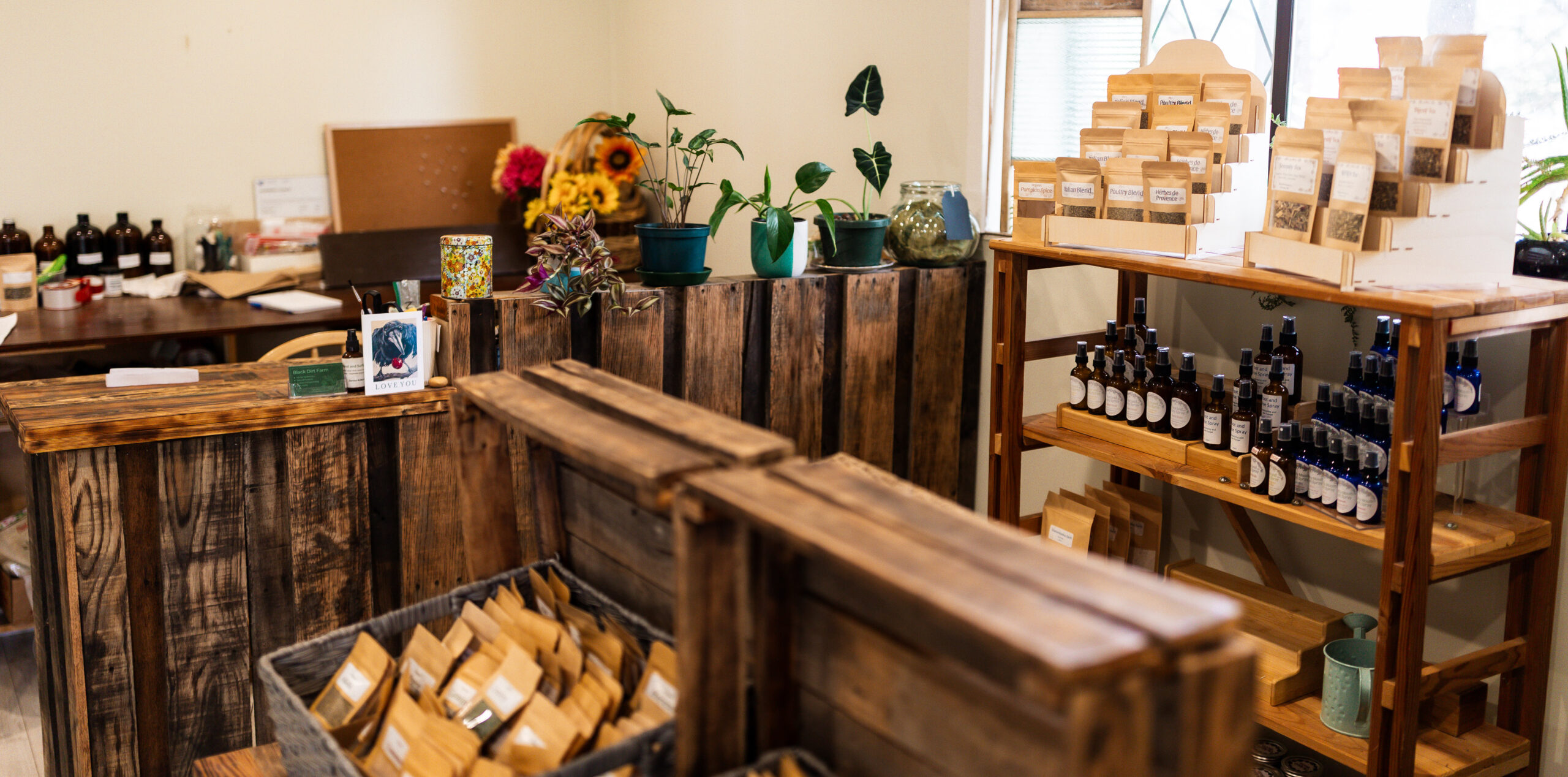
A trained herbalist, Denise has recently retired and is now focusing her time and energy on maximizing income from the farm with plans underway to open up a new onsite storefront farm shop. As well, there will be a small consultation area for Denise’s medical herbal practice where she can provide natural health consultations with clients. Farm produce, barrel products, and herbal apothecary information is outlined on her website.
It all takes commitment and a healthy pragmatic perspective. “It’s a big leap of faith and there are no guarantees crop will succeed,” she comments. “It’s important to look after yourself. If you get hurt, there’s no one to step in. Also, you can’t get away very often.”
This enthusiastic farmer, however, wouldn’t want it any other way. She finds her farming lifestyle rewarding and satisfying. Moreover, she feels very privileged to do so. “I don’t feel like an owner but more like a guardian of this property. I am taking care of it while I am here,” Denise shares. “I do the best job I can to honour that responsibility and enrich the land as much as I can.”
Enrichment not only comes in the form of charcoal-enhanced soil, but for this farming woman, it represents a broader connection with the land upon which she lives and the community in which she interacts.
www.blackdirtfarm.ca