

Words Jo Barnes
Photos Sarah Hartley Photography
This column has covered everything from planting to productivity, mulching to marketing and flowers to farm animals. But out of the hundreds of columns that have been written, one topic has, quite surprisingly, been overlooked. What is this mystery oversight? It is the most basic component of farms: the very stuff in which plants grow.
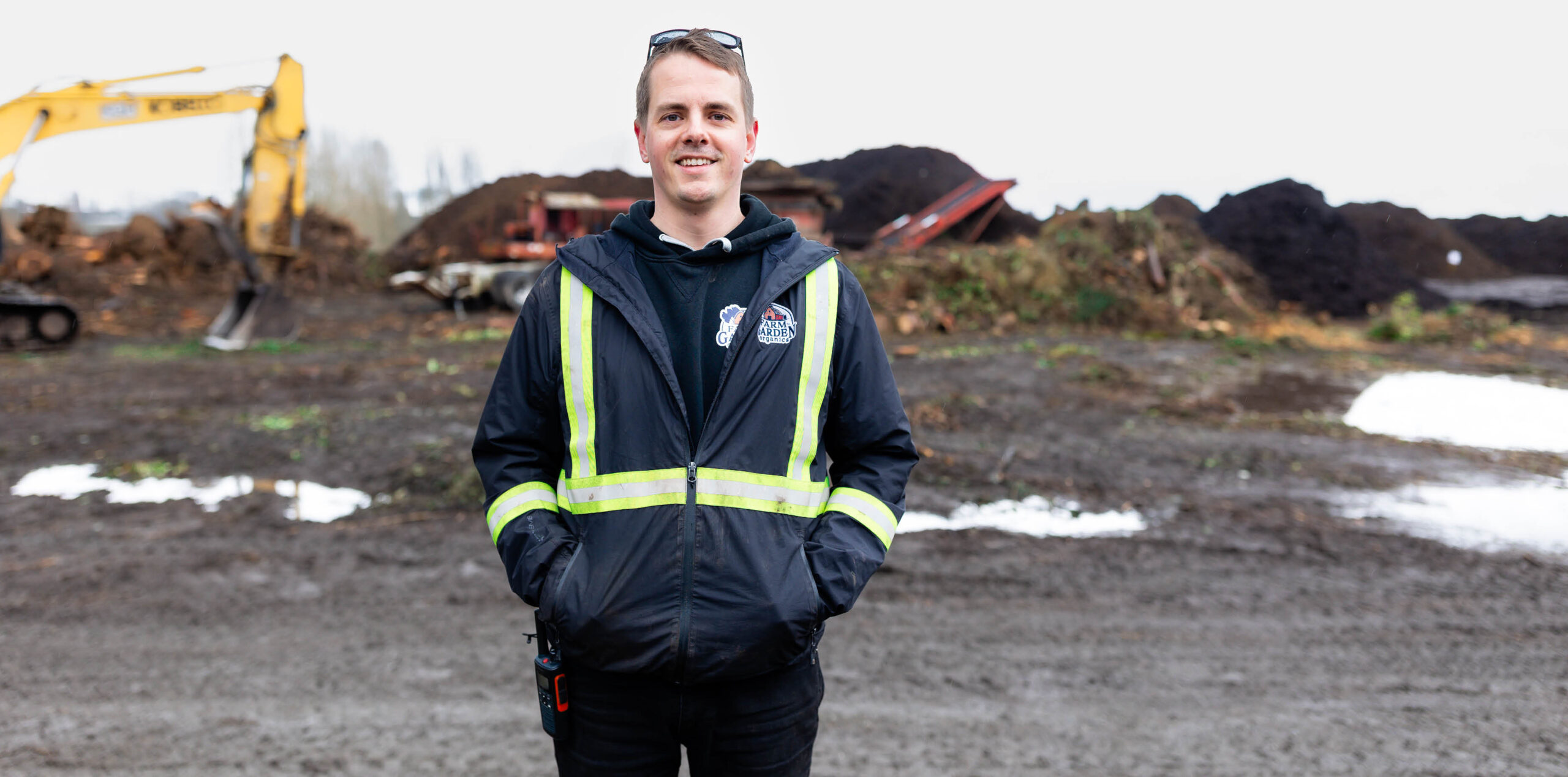
There’s no better way to correct that oversight than by looking at the work of Joel Aldrich. He is the General Manager of Farm to Garden Organics, a farm in Central Saanich that repurposes garden waste into a premium all-natural soil developer, thereby keeping it out of landfills, making for a greener community while providing excellent compost for local growers.
“I fell in love with agricultural composting. It comes in as waste and goes out as something of real value,” shares Joel. “I grew up on a family farm in Cobble Hill and was part of the 4H program. So, I have background in agriculture.”
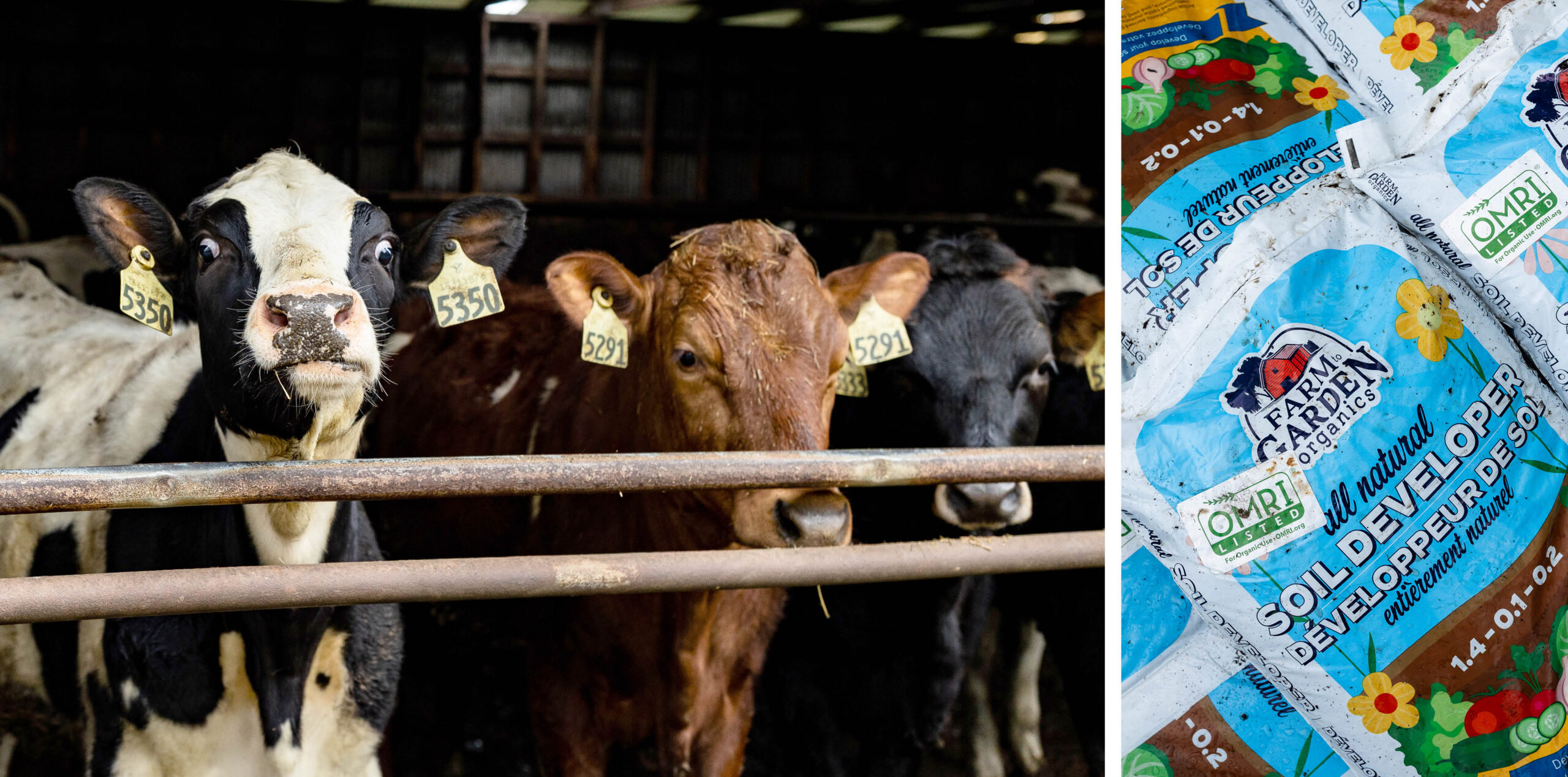
As reflected in the business’ name, there is a closed-loop system at work here. The green plant material becomes bedding for the onsite dairy cattle who in turn provide manure. The recycled green waste is blended with the manure to generate nutrient-rich compost ideal for gardens and growers.
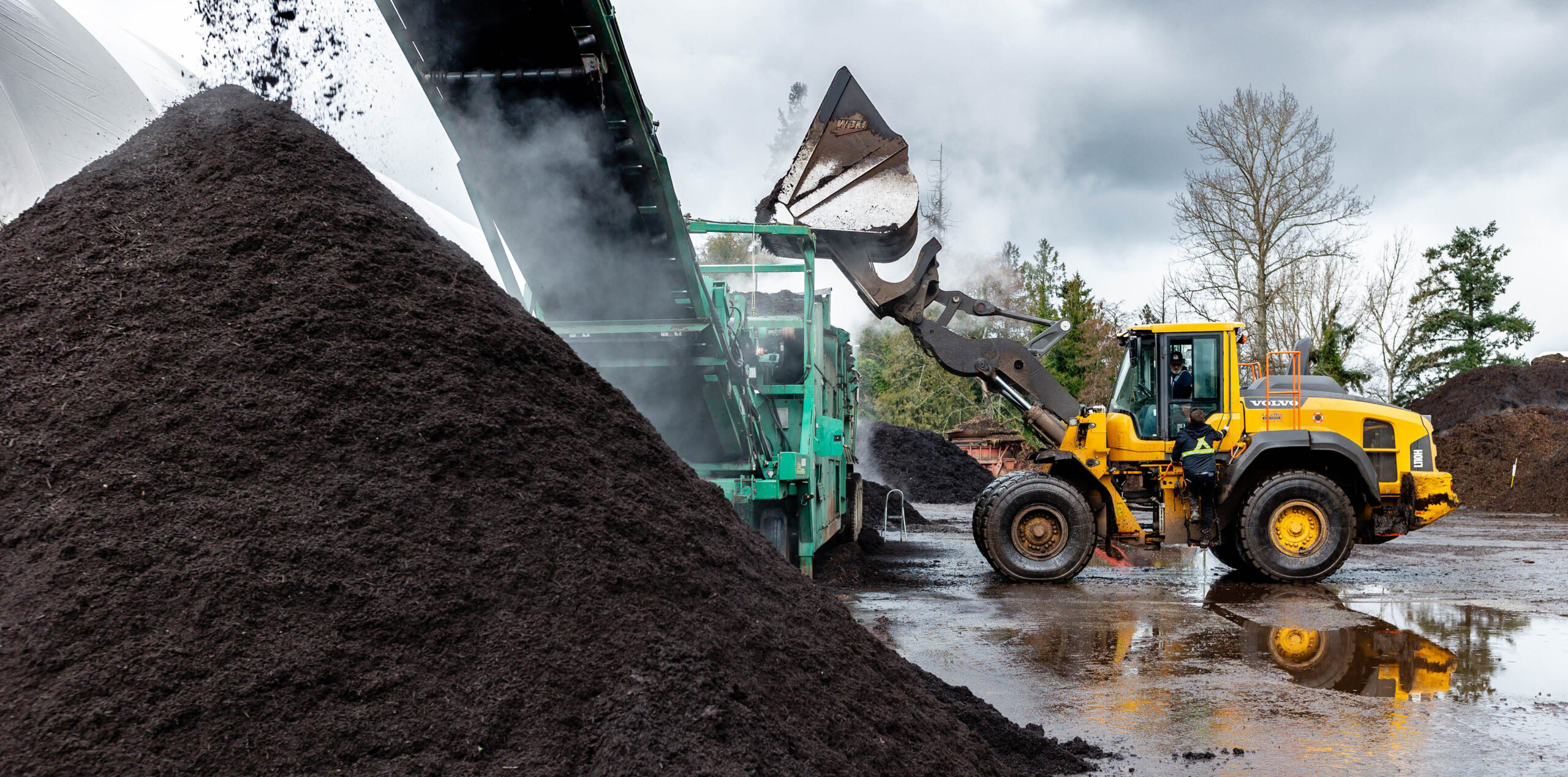
The sheer size of the facility and the heavy-duty equipment used to move and arrange recycled material tells visitors immediately that this is much more than your everyday compost bin in the backyard. However, it does operate on very similar principles. So, what makes good compost, you might ask?
Well, according to Joel: “Your feedstocks are crucial. If carbon and nitrogen are out of balance, then you don’t have good compost. You need greens for nitrogen, browns such as twigs, woodchips or shredded cardboard for carbon. Compost needs to be turned frequently to keep oxygen through the material. Roughly 60% moisture is essential. Not enough will slow down decomposition; too much restricts airflow and leads to odours and soggy compost.”
The composting site was formerly Stanhope Farms, a large dairy farm dating back to the 1950s which over time transitioned to selling manure-enriched compost sales. The facility underwent renovations in 2015 to process agricultural waste and manure and finally was rebranded to the precent business of Farm to Garden Organics in 2020.
The sprawling 99-acre property is an active space accommodating housing and field areas for 300 heifers and various processing facilities including Quonset huts for storage and a large covered production area where compost is created. Critical to this process are the fans behind this facility that blow air through underground pipes below the massive piles of recycled green material. This aeration helps to maintain aerobic conditions and limits temperatures for effective decomposition.
The composting processes at Farm to Garden Organics undergo thorough monitoring in accordance with national testing and standards. “We do rigorous testing through A & L Canada
Laboratories to confirm the absence of pathogens and heavy metals, while also verifying the nutrient content of our products,” notes Joel. “Our products are certified by OMRI (Organic Materials Review Institute) Canada to comply with organic production standards.”
Customers range from local farmers and producers to landscapers and homeowners. Many are repeat customers, returning each time because of the quality of the soil developer. “We get very positive feedback from customers. A fair number of them are in the Gulf Islands and are certified organic growers, so compost is very important,” says Joel. “Customers repeatedly say that they have no problems with weeds and their plants are super healthy.”
The compost is sold in cubic yards; this represents a three-foot cube of compost. Customers can have the compost loaded into their truck or utility trailer or can arrange for delivery. Last year, the company launched a new bulk bag service whereby a three-foot-by-three-foot bag containing a yard of compost can be delivered to the customer.
For Joel, who holds an Economics degree and years of Engineering studies, managing this operation is both challenging and rewarding. “I like the diversity of changing daily priorities and tasks: field management, heifer management, sales and marketing. I am always learning and get to work both in the office space and out working with team from an operational perspective,” he shares. “I’m interested in process control and operation. High quality is really important and we’re always looking to develop
our products.”
Quality compost is foundational to healthy gardens and farm environments. Plants take root and flourish in soil that nourishes them. As Joel shares, it’s crucial to choose the best compost you can to ensure optimum results. “Take your time to research what you are purchasing in terms of the quality standards and controls.”
It’s sage advice. As this agricultural compost enthusiast well understands, when it comes to growing, it will never be more important than great compost.
www.farmtogarden.ca

