
Words Jo Barnes
Photos Sarah Hartley Photography
When we think about farming, we think of it as crops spreading out as far as the eye can see … but we seldom think of looking up. This Sidney farmer is approaching it from a completely different “angle.”
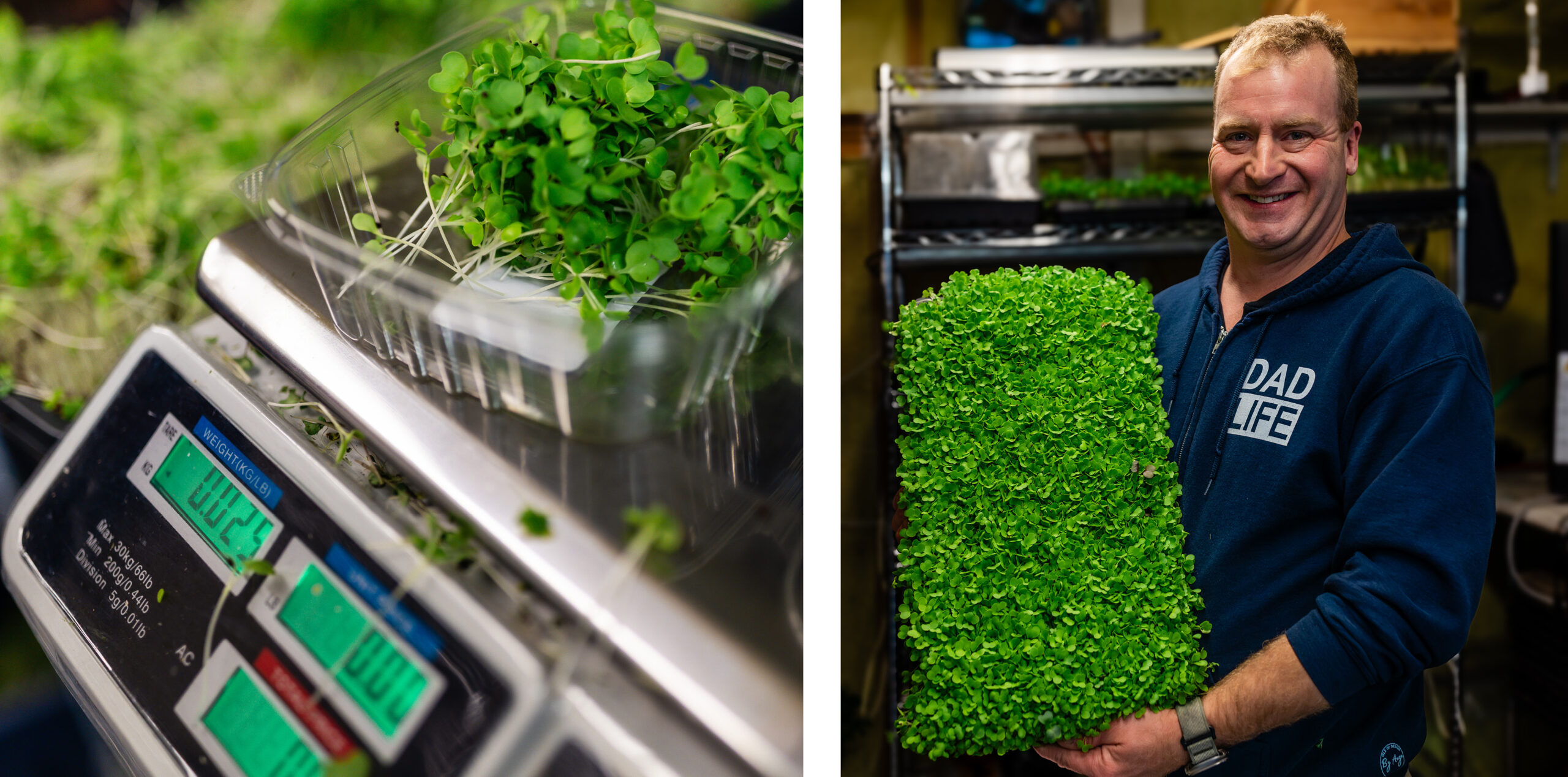
Since 2022, Mark Verhulst, owner of Sidney Microgreens, has been growing young seedlings of edible vegetables and herbs called microgreens in vertically stacked layers, otherwise known as vertical farming. “The seed is put into in shallow trays, stacked eight tall with 20 trays on a rack,” shares Mark. “It is a vertical grow space.”
The concept for this self-sustaining urban farm came to Mark one day while he was relaxing in his home. “I had an idea one day and realized I had the infrastructure to do it. I had an outbuilding on my property and thought I could make use of the space and build a greenhouse,” shares Mark. “I was interested in being a part of bolstering food security and offering highly nutritious food to the community.”
Microgreens are not your typical crop. Mark explains: “It is the stage after sprout and provides 40 times the nutrient value. Microgreens are a simple addition that elevates original nutrition to the foreground.”
Sidney Microgreens grows and markets a variety of these greens including kale, mustard, radish, sunflower, pea, cilantro, basil and various combinations including a crunchy mix and smoothie combination. Customer response has been positive. “Promotion is mostly word of mouth. Many really like the cilantro greens. They are excited about the lemon zest flavour,” says Mark. “A customer shopping in Peppers store one day wanted a particular variety of microgreen, so Peppers called us. That’s how we got our product into their store.”
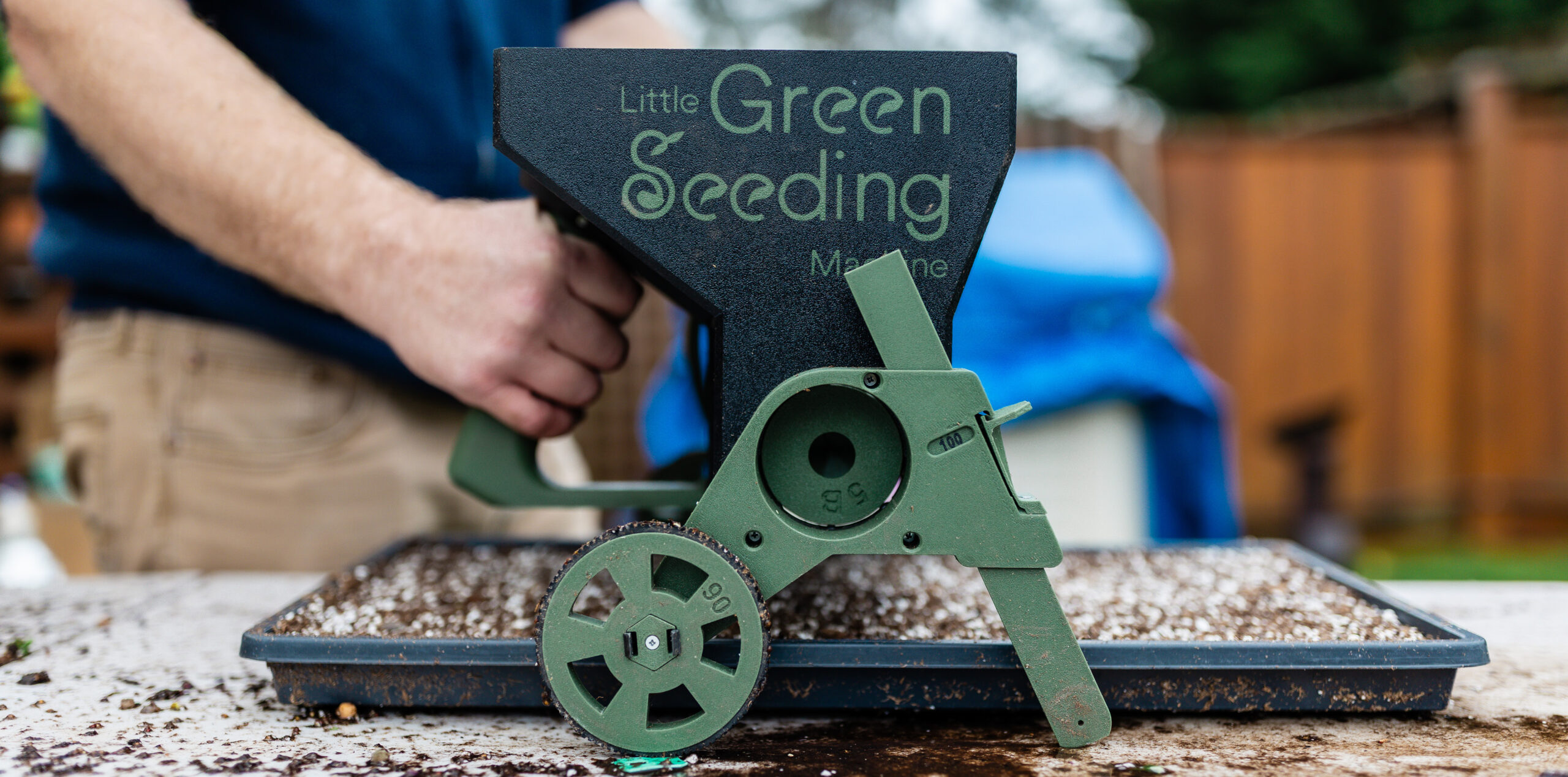
The process of growing microgreens involves more than just stacking trays. Using a small seeding machine which resembles, in Mark’s words: “a micro combine,” organic seeds are deposited into each soil-packed tray and then watered. Trays are stacked and placed on shelving. The weight on top ensures seeds are pressed into the soil to absorb moisture well and for consistent germination.
“They are stacked so that the growing seedlings can push against each other. The weight on top helps give the greens direction to grow. They straighten up and grow taller,” outlines Mark.
After germination, the trays are unstacked and placed under LED lighting. “The lights make them take their true colour. They green up over the next six to seven days until harvest,” says Mark.
Customers can order the greens online or through weekly, bi-weekly, and monthly subscription service options. The microgreens are also sold through retail grocery shops including Lifestyle Markets, Root Cellar, and Peppers Foods.
Learning how to plant, tend and harvest has been a definite learning curve for Mark. Technology played a significant role in his self-directed education. “I watched YouTube videos and also took an online course in microgreens. It focused on the brassica (broccoli) variety. This gave me the right direction to go,” he shares. “There is a lot of trial and error. For example: you want to avoid watering too close to harvest.”
Along the way, Mark has also discovered the uniqueness of each seedling variety and other intricacies of the microgreen growing process. “There are variations in seasonal needs. On hot summer days, you need to move the air around,” he relates. “The types of microgreens can also really vary. Sunflowers are very thirsty. Peas grow like they
are angry.”
Mark’s small-scale venture not only offers highly nutritious food to customers, but it represents a good example of eco-friendly farming. The growing area is not the typical multi-acre plot, but only a 10- by 16-foot structure. Equipment is small and simple, and the mature crop reaches only inches in height. But this is definitely a case where less is more – minimal space means reduced land and water use.The location, in an urban area close to customers, means reduced CO2 emissions related to transportation. A controlled environment means the need for pesticides can be eliminated.
“With a microgreen farm, I can grow all year round in a controlled environment in which weather doesn’t affect the yield,” comments Mark.
At this festive time of year, Mark shares that microgreens provide lots of culinary opportunities. “It’s the time of year when people are entertaining a lot. Microgreens can add great taste, nutrients and a ‘wow’ to your plate’s appearance,” he says enthusiastically. “You can put them in a salad, a sauce mix or in soups, and they’re really great on a charcuterie plate.”
Though they are tiny, microgreens are eye-catching, tongue tantalizing, and can add a mighty nutritious punch and that “stacks up” to a tasty addition to any festive meal.
www.sidneymicrogreens.com