Words Richard Hope
Fall is a great time to be at a vineyard. On Vancouver Island, grapes are harvested in late September and early October, before any significant rains begin. This was a fairly typical year for grape growing on the Island, although a cooler-than-expected July reduced the volume of grapes that could be harvested. Timing is critical. Pick too late and the grapes may be overripe and full of sugar or, if there has been rain, vulnerable to fungal infection. Get it right and the fruit comes in at its best.
Once picked, the grapes are separated from their stems (destemming) and crushed. What happens next depends on the colour of the wine. Red wine gets its colour from the skins, so red grapes are left to ferment with their skins for anything from a few days to a couple of weeks. White grapes are pressed and the juice is separated from the skins straight away. Fermentation with yeast takes anywhere from one to four weeks, after which the wine is drawn off the dead yeast and, in time, bottled. There are many variations on these methods, such as aging the wine in oak, or fermenting it in concrete, stainless steel or wood. The freshest whites and rosés from this year’s harvest will be on sale by the end of next spring, with most reds taking longer.
The same process is playing out all over the Northern Hemisphere, and 2026 has been a very challenging year. A warm winter led to early budbreak (when the dormant vine pushes out its first leaves), which was followed in some regions by frost or hail that damaged or destroyed up to 90% of the new shoots. Summer heat and fire across Europe heavily damaged production in Bordeaux, Provence and the Sierra de Gredos, west of Madrid. Erratic weather means there are winners and losers. Winemakers across Italy and southern England are celebrating some of their best seasons, and warmer years have helped regions like Barolo ripen their grapes more reliably. As the world warms, grapes are now grown as far north as Sweden.
Then there is Mount Etna in Sicily, now often described as a “new Burgundy.” Its vineyards sit high on the slopes of the volcano, where altitude keeps the vines cool while the rest of the Island bakes, and its pale, elegant reds come from small, parcel vineyards.
All of which brings us back to Vancouver Island. For years our cool, damp climate was seen as a handicap, good for crisp whites and not much else. That is starting to look like an advantage. As growers in Bordeaux and central Spain fight heat and fire, the Cowichan Valley is ripening Pinot Noir more reliably than it did 20 years ago, and the wines are getting better with each vintage. A cool July will still cost growers some fruit, as it did this year, but what was picked is in the cellar now. If you want to taste what a changing climate means for wine, here are three bottles to start with.
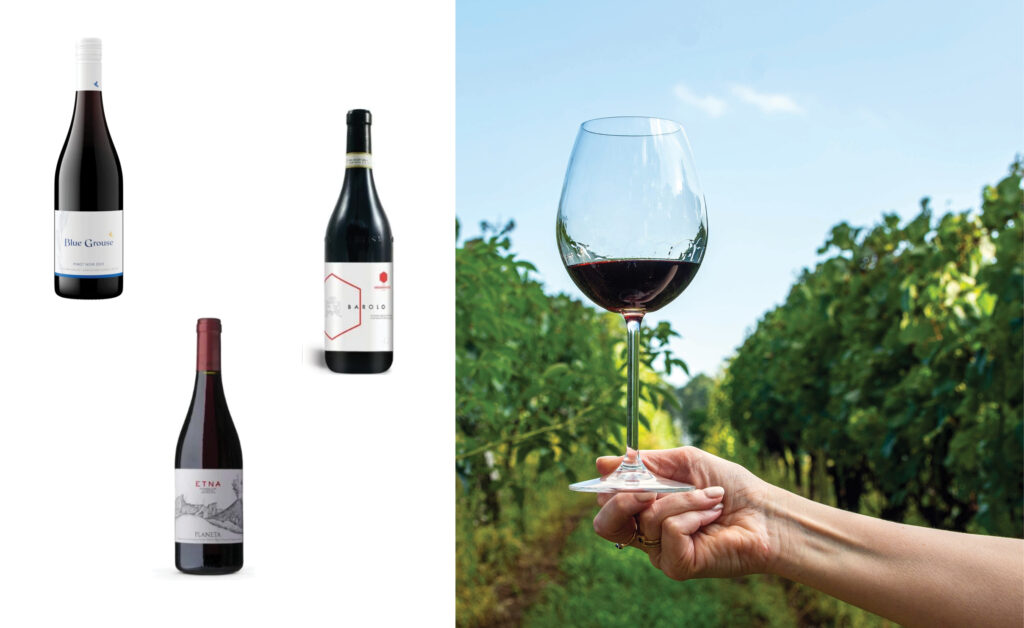
THREE TO TRY
Blue Grouse, Cowichan Valley Pinot Noir
Blue Grouse is one of the oldest names in the Cowichan Valley and the wines have never been better. Part of the wine is fermented in clay amphorae and it then spends 18 months in French oak. What you notice is how light it is: pale in the glass, only 11.5% alcohol, with raspberry and red cherry fruit, a floral lift and a clean, slightly salty finish. This is what a cool climate does to Pinot Noir, and it is the opposite of the heavy, jammy reds that hot regions are now struggling to avoid.
Planeta Etna Rosso 2023
Planeta is one of Sicily’s best-known wine families, and this comes from their vineyards on the northern slopes of Mount Etna, where altitude keeps the vines cool while the rest of the island swelters. It is made entirely from Nerello Mascalese, the local grape behind the Burgundy comparisons. The wine is pale in colour with sour cherry, wild strawberry and a smoky, stony edge from the volcanic soil. Try it with roast chicken or a simple tomato pasta.
Castello di Perno Barolo 2018
Barolo is made from Nebbiolo, a grape that ripens late and for generations struggled to ripen at all in a cool year. That is rarely a problem now. This one comes from Monforte d’Alba, one of the region’s top villages, and from a vintage that produced lighter, more perfumed wines than usual, which means it is ready to drink now. Expect dried roses, red cherry and a firm, drying finish. Open it an hour ahead and serve it with braised beef or mushroom risotto.