
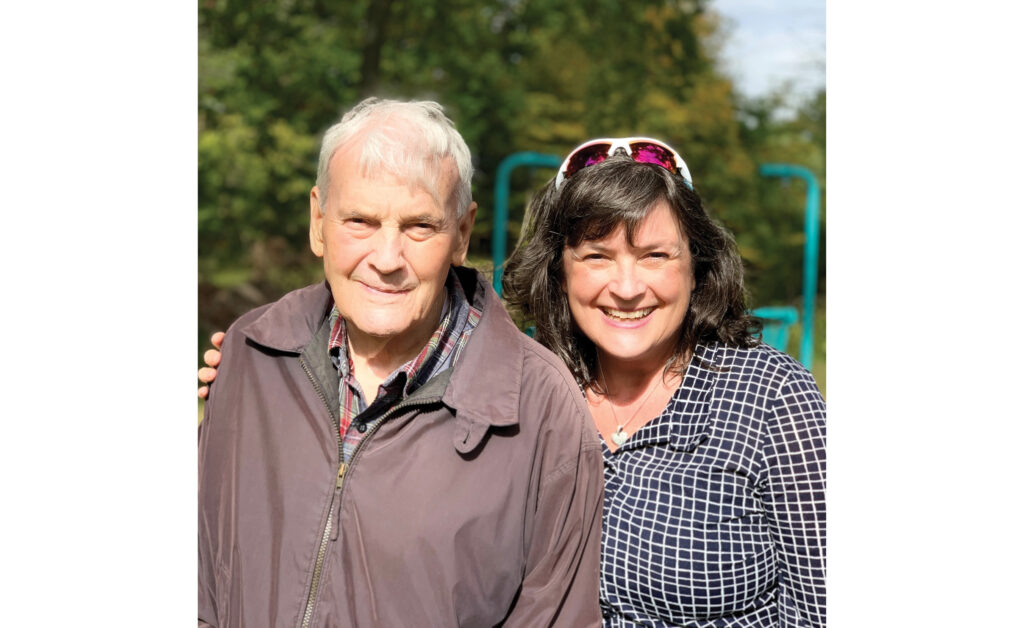
Words Connie Dunwoody, Broadmead Care
When I was a teenager, my dad and I sometimes struggled to understand each other. I was (mostly) grumpy and always ready to push back. He was strict, serious, and not easy for me to talk to. My brother could sit with him and discuss ideas for ages, but I never found that rhythm. Our conversations felt strained, and I often wished we could be closer, and easier in each other’s company.
Everything changed after Dad’s diagnosis of Alzheimer’s and Lewy Body dementia. I never expected that his illness would soften old patterns, but it opened a door between us. Through my work at Broadmead Care, I learned new ways to approach him. I found patience I didn’t know I had. I began asking about his youth, more out of hope than expectation. To my surprise, he started to share; stories he had held tightly for years began to surface. It felt like memories once locked away were drifting gently back to him, and he was willing to let me hear them. It felt like a new beginning.
As the new year arrives, I find myself reflecting on that change. January often invites us to pause, look back, and think about how our lives and relationships grow and shift. It reminds me that a dementia diagnosis is not necessarily about an ending. Sometimes it offers a new beginning, a chance to see someone we love with fresh eyes.
Seeing the Person Behind the Diagnosis
For many families, a diagnosis feels like the start of loss. We brace ourselves for decline and prepare for grief. But dementia can also reveal parts of someone that were hidden by years of routine and responsibility. With Dad, I discovered a sweet, gentle man, quite separate from the stern academic I had previously known. I saw hints of the earnest young man he once was, along with the father he strove to be. It was simultaneously lovely and heartbreaking.
This rediscovery didn’t take away the hard days. It didn’t erase worry or sadness, but it gave me moments of honesty and connection. It let me meet him where he was in the moment, rather than clinging to who he once was. When I allowed space for this shift, I found a loving relationship with the sense of connection I’d longed for.
Reimagining Home and Belonging
“Home” can take many forms. As dementia progresses, perhaps it becomes less about a physical place and more about feeling safe and understood. For families, long-term care can feel unfamiliar or even frightening at first. Our language does not help. We say things like, “We put Grandma in a home.” We’re not storing Grandma like a cedar chest tucked in the attic. It’s a new chapter for her, one where she can receive the care she needs, in ways we cannot provide.
If we view “home” as a new beginning filled with safety, comfort and community, then perhaps long-term care looks different: a place where someone is welcomed, supported and honoured. Their stories matter. Their identity matters. When we embrace this shift, long term care becomes part of a loving circle with new beginnings rather than endings. And with Grandma living in care, families can return to being spouses, daughters, or sons, instead of carrying the full weight of caregiving alone.
When we allow ourselves to see the diagnosis through a different lens, we make room for grace. We learn to start again each day. We learn that connection can still grow, even (and sometimes, especially) when memories fade.
Moving Forward Together
Dementia changes many things, but it does not take away the ability to love or be loved. A new year reminds us that relationships can evolve in meaningful ways. Rediscovery, belonging, and new beginnings are always possible. And as I learned, the most unexpected chapters can bring an unexpected result: the closeness I was searching for all along.
Connie Dunwoody is Communications Coordinator for Broadmead Care. She believes in the enormous possibility of new beginnings.