Words Jo Barnes
Photos Sarah Hartley Photography
Sometimes you have to stop and smell the roses.
That certainly is part of the joy for the growers at Eurosa Farms and is one of the dividends of their year-round hard work. “We are one of only two commercial rose growers in Canada,” shares Paul Bulk, Head Grower. “Roses are stunningly beautiful, but they are labour-intensive.”
Started by Hans and Debbie Bulk in 1979, Eurosa Farms in Central Saanich has expanded over the years and now grows over 80,000 rose plants in its 4.3 acres of greenhouses. This is no small feat as the number of commercial rose growers in this country has significantly declined over time. “In the 1980s, there were probably seven rose growers in B.C. and others in Quebec and Ontario. There is one other small rose farm, but we are the main commercial grower now,” relates Paul. “Due to economic changes, production shifted to South America. Colombia and Ecuador are the two main production places.”
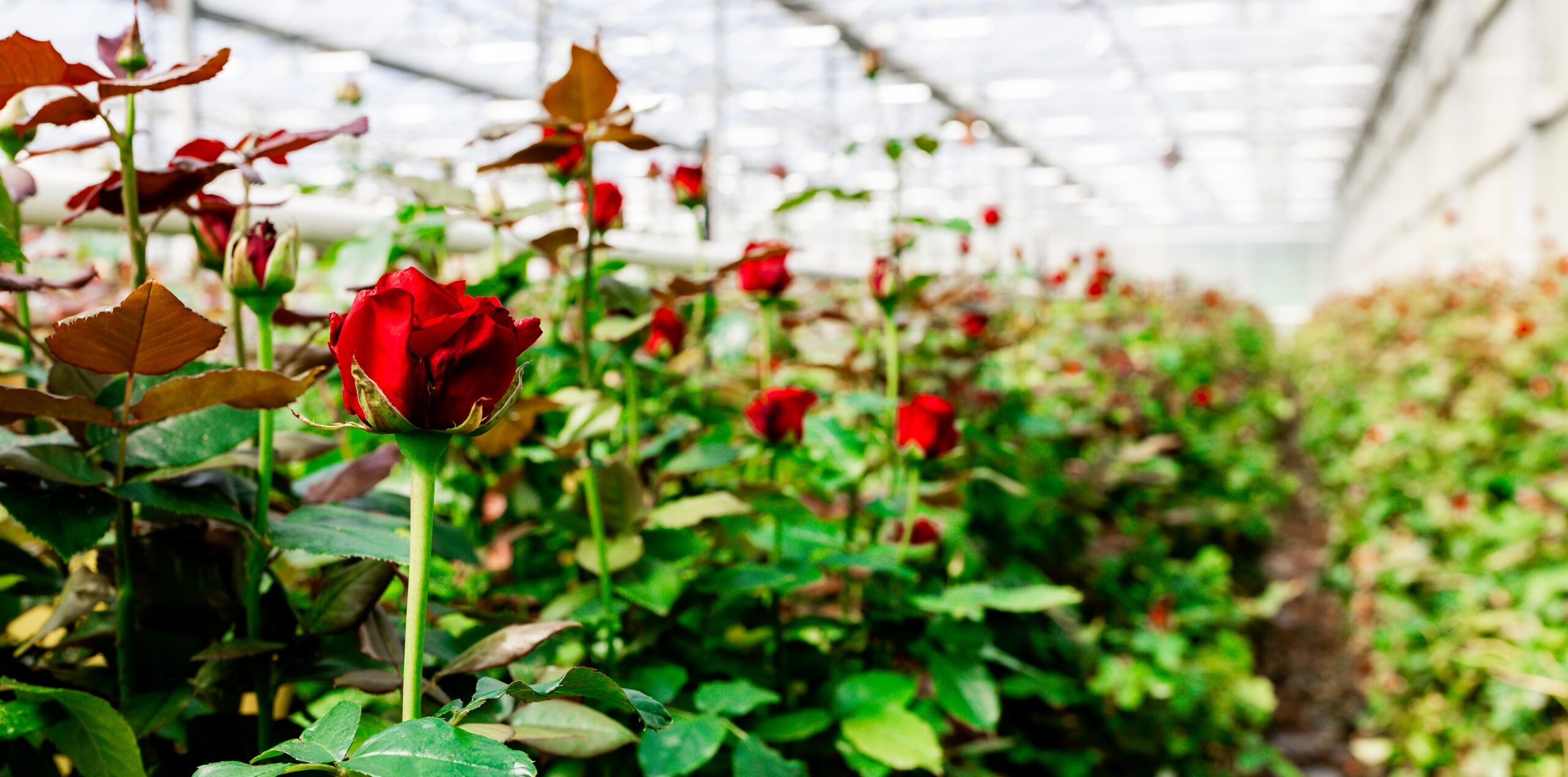
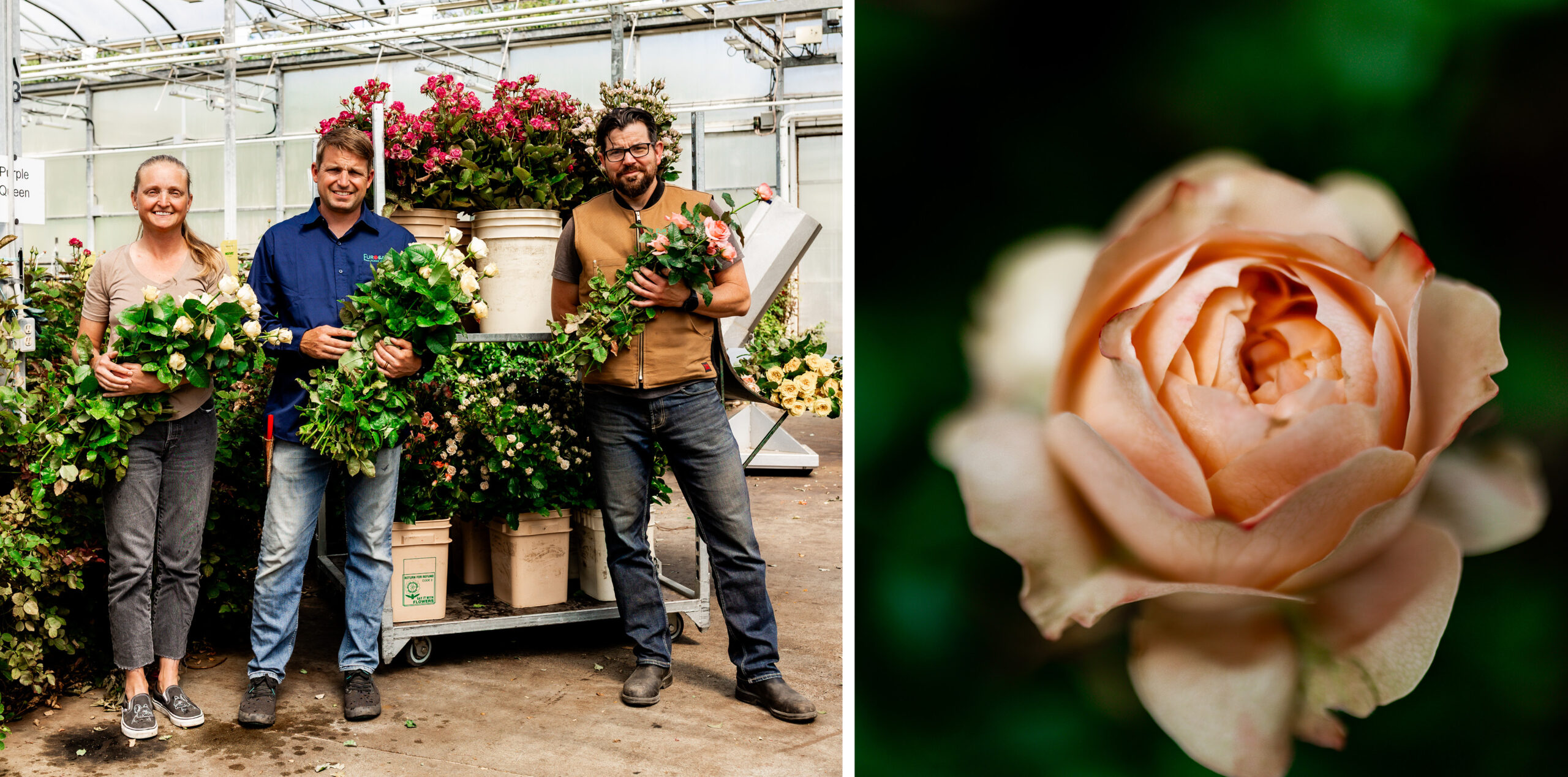
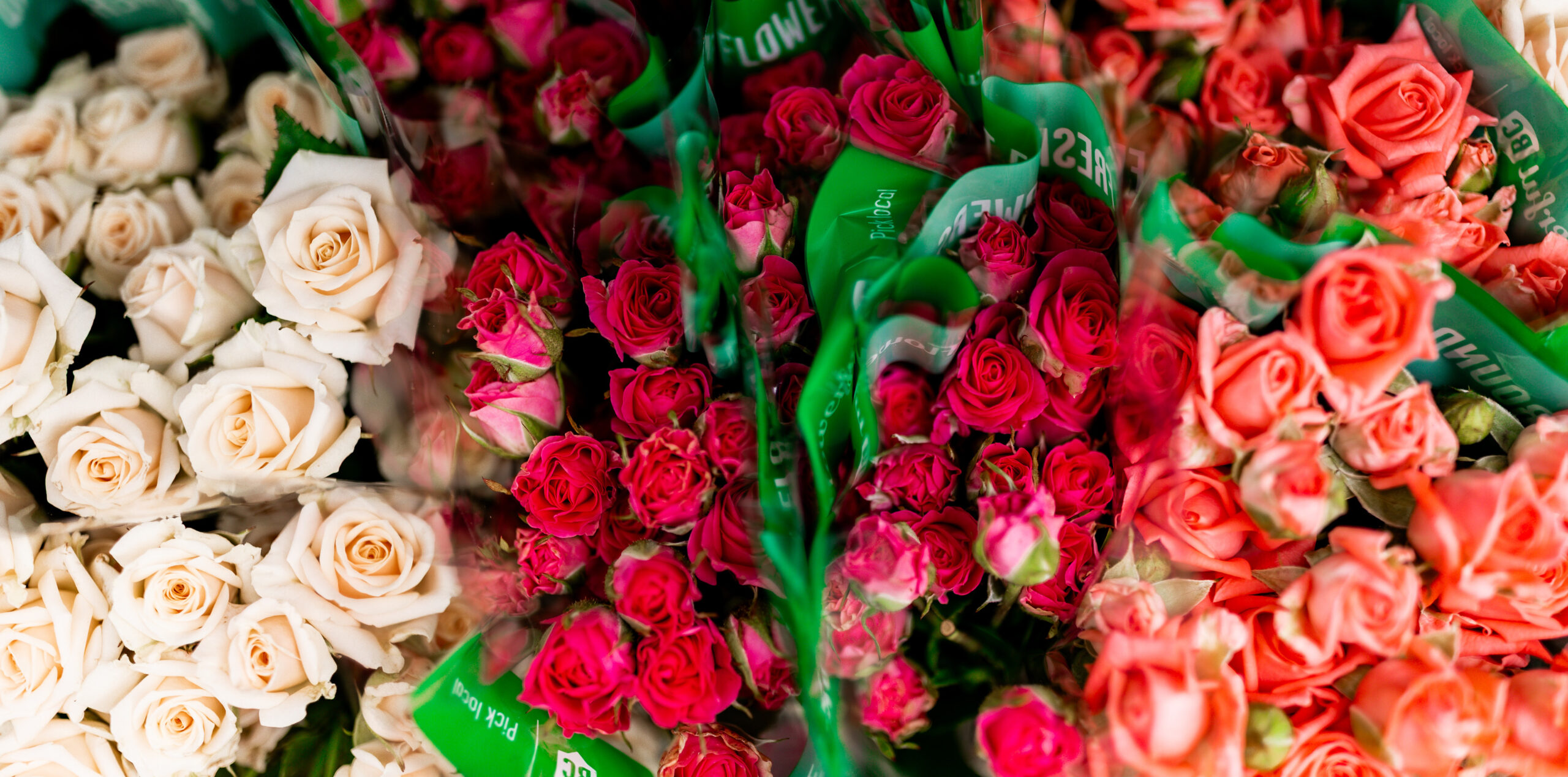
The flowers cultivated at Eurosa Farms are hybrid tea roses – either single head long stem such as the extravagant “Red Naomi” or spray with multiple heads like the cream-coloured Tanja. As well as numerous varieties of roses, colourful Alstromerias are also grown. Flowers are made into exquisite bouquets and fresh arrangements, all marketed in various ways including a rose delivery subscription service launched in 2025. “Large quantities of our flowers are marketed through United Flowers Auction on the mainland, sold wholesale to local grocery stores and delivered to Victoria and Peninsula locations,” outlines Paul.
“Our online store offers a great selection,” adds Kristen Bulk. “Our coastal-themed bouquets are now available to the public for the first time in 47 years.”
The inherent costs to growing roses and the increasing competition from imported product makes for some definite challenges. “There are rising costs like fertilizer, transportation and supplies,” says Paul. “Also, our competition is not local. In South America, the land is nearly free and labour is cheap. The roses grow there at a high altitude which means they have a longer stem development.”
Imported roses, however, do not last as long, and the transportation and cold storage time mean a significant impact on the environment. The roses at Eurosa Farms are hand-harvested six times a week ensuring ultimate freshness. They are all grown hydroponically, meaning they’re cultivated without soil. “The roses grow in five-gallon pots, each of which contains ‘coir’ or ground-up coconut husks in them. This is the soil media,” shares Paul. “The roses are grown on top of a trough which collects water inside it.”
There are five main growing compartments, inside of which are multitudes of rows of rose plants. Nourishment comes to the plants through a highly efficient irrigation system. “They are nourished by nutrients dissolved in the water that is fed through water lines,” says Paul. “The plants receive two times the amount they can drink. The extra water is collected, sterilized and then pumped back into the main tank.”
In addition to the hydroponic approach to growing, there are technologies implemented with regard to lighting to both reduce the impact on environment and optimize energy use. An integrated pest management system, whereby living organisms are introduced to deal with pests, serves to increase productivity and enhance sustainability. “The lighting is a hybrid of LED and HPS (High Pressure Sodium) which is radiant heat and helps the buds stay warm,” relates Paul. “We have been using biological pest control for around 15 years now. It is introduced from bags that release the pests around the plants or sprinkled by hand.”
Maintaining this operation requires dedication, effort and experienced hands. There are now three generations of family involved, including Paul and his wife Elaine, Ryan Worsfold who serves as Sales Manager and his wife Nicole, Danielle Litke who oversees grading and bouquets, and Kristen Bulk who handles accounting. There is a staff of 30 full-time workers, and each one is experienced and trained in what they do.
“Roses are the king of flowers, but they are very fussy. They don’t like to be wet, need lots of light and need specific pruning and picking. For example, if you cut back too far, the plant might not come back or the stems will not be very high quality,” comments Paul. “So, the crew needs to be knowledgeable. There’s lots of training involved as people need to do things correctly.”
It is an intricate operation involving significant planning, maintenance and consistency, but as Paul affirms, the rewards are undeniable. “This is unique what we are doing. It has its challenges and opportunities. My parents were very successful and we are continuing the operation. I feel blessed and am lucky in my part in all of this.”
At Eurosa Farms, the work and commitment are ongoing, and while the team might only have moments to stop and smell the roses, their customers can enjoy and appreciate them all year round.
www.eurosa.bc.ca