
Words & Photos Ann Nightingale, Rocky Point Bird Observatory
Spring sprang and by now the bushes should be buzzing with the results. Baby birds are out and about with watchful parents trying to keep them fed
and safe.
Here are some things you might not know about Birds: The Next Generation.
Most songbirds are the same size as their parents when they leave the nest. Parents work diligently to keep the babies well fed during their time in the nest. It takes thousands of insects to feed a nest of birds. The chicks develop quickly, and their feathers grow faster than they ever will again. This gives young birds their fluffy appearance and can make
them look a little larger than their parents.
Although they are about the same size, many young birds look different than the adults. A lot of the songbirds you will find on Vancouver Island have distinct juvenile plumage. The size and shape of the offspring will more or less match their parents, but the colouration may be more cryptic or drab to help conceal them in the nest and for their first few days on the ground. Many young birds grow a new set of body feathers within a week or two of fledging.
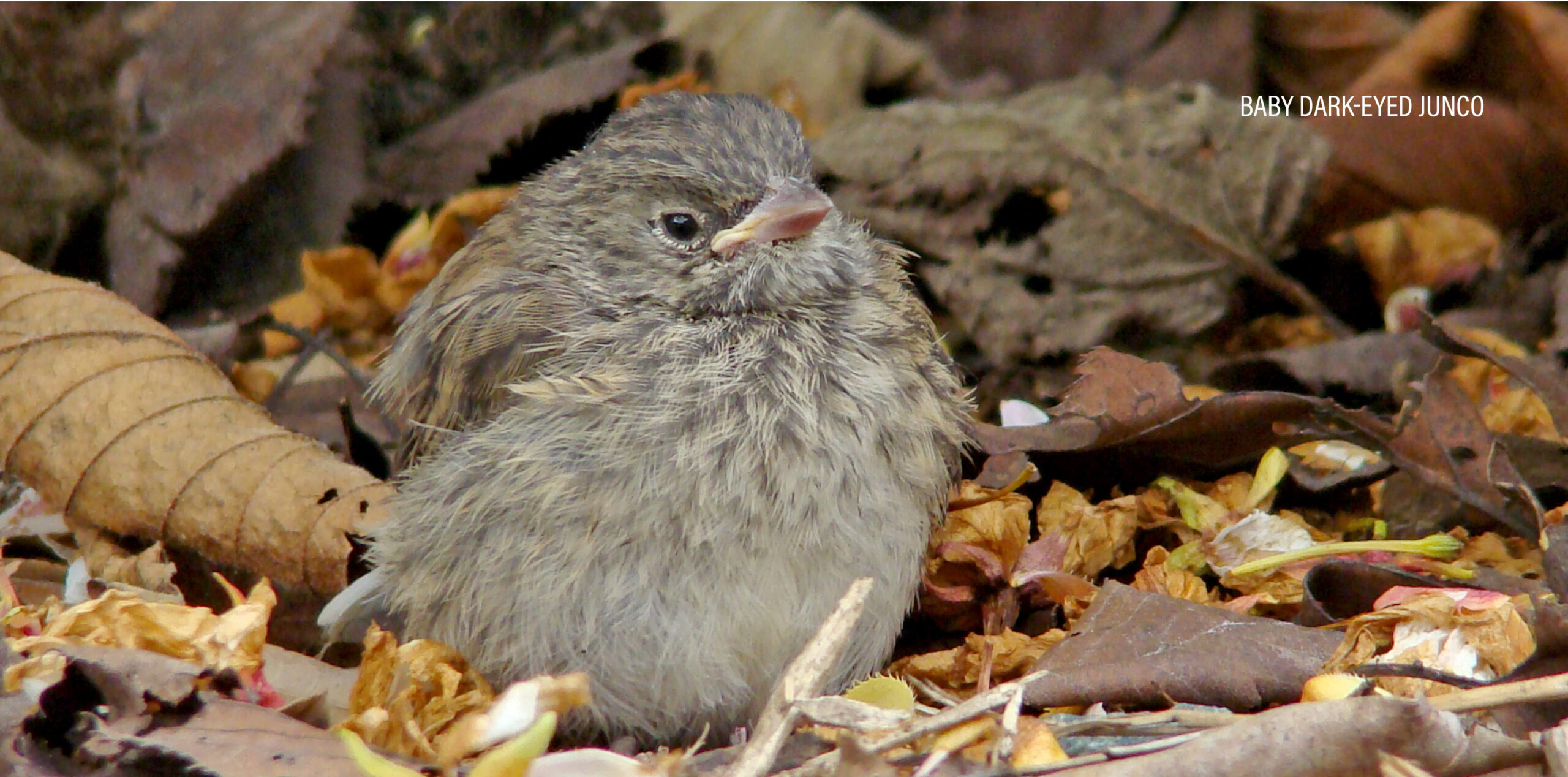
Many young birds can’t fly very well when they leave the nest. From robins to hawks, and even the larger owls, a lot of youngsters spend more time on the ground than in the trees or in the air once they have made that big leap. There are some exceptions like swallows and hummingbirds, but it is normal for a young bird to be more or less earthbound while it is learning to fly.
A surprising variety of birds nest on the ground. We expect this of birds like ducks and quail, but most sparrows, killdeer and other shorebirds, some marsh birds, and quite a few warblers normally build their nest on or very close to the ground. This makes them very vulnerable to our pets and even ourselves as we walk through forests and fields or tend our gardens.
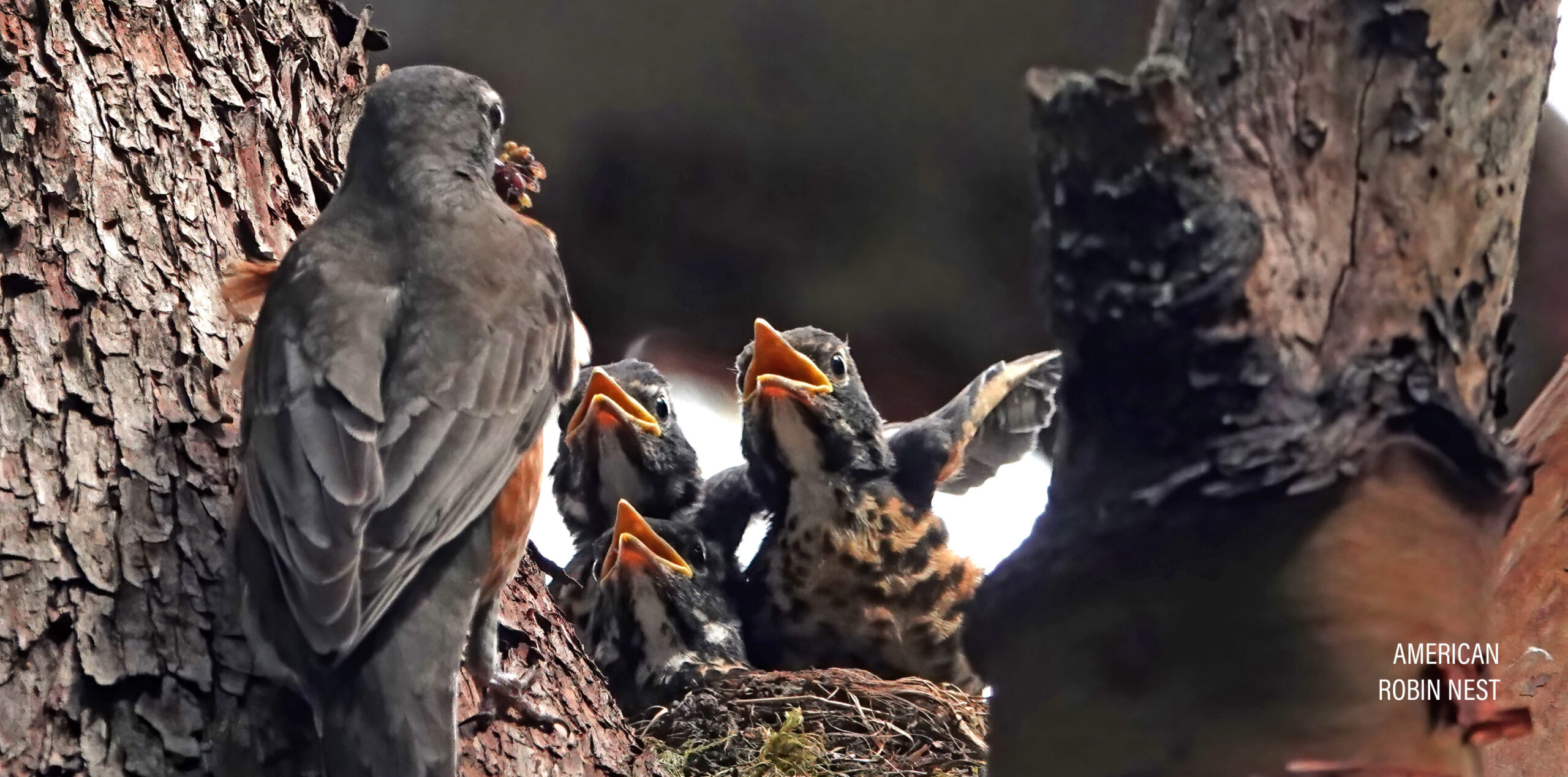
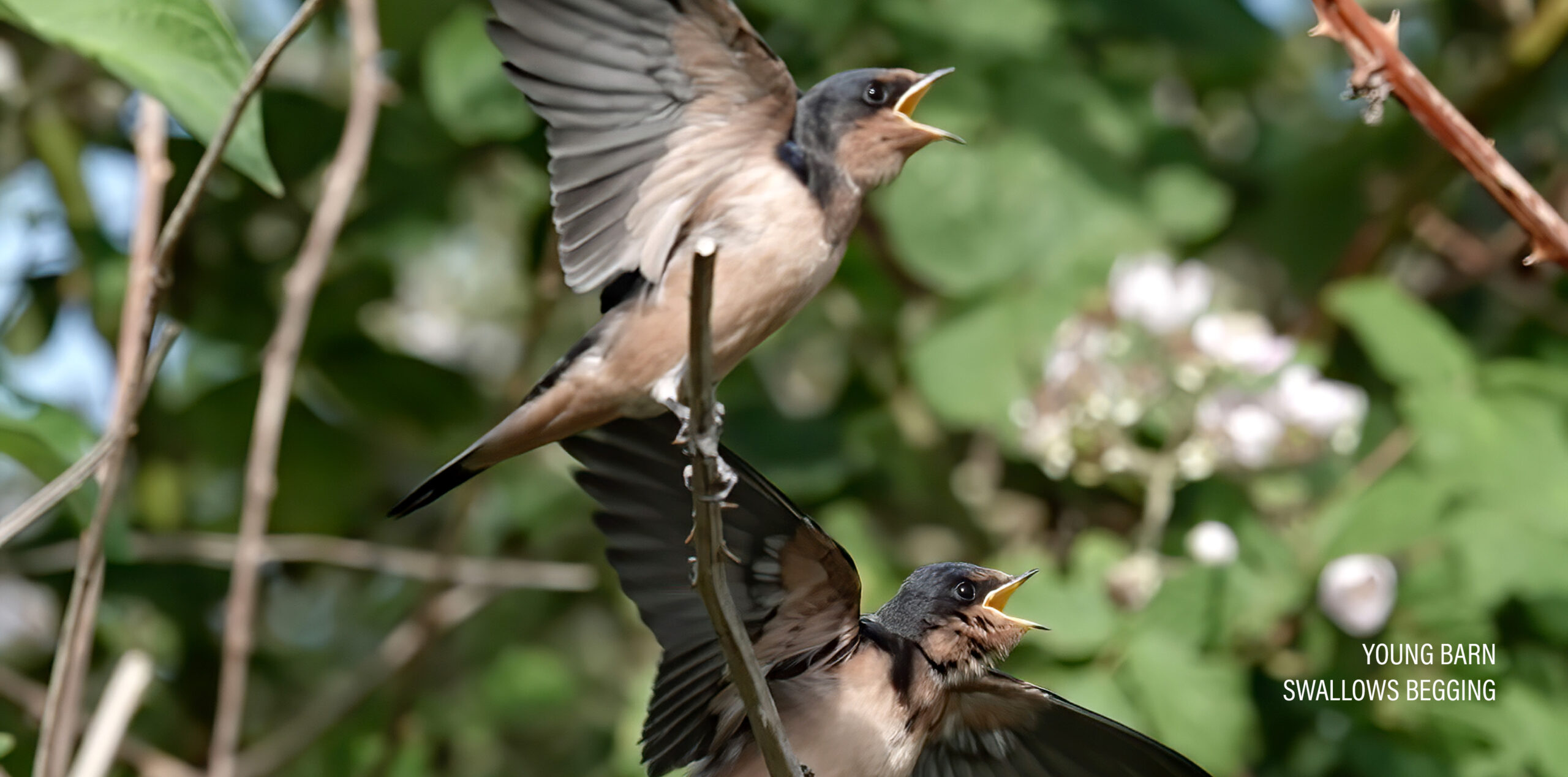
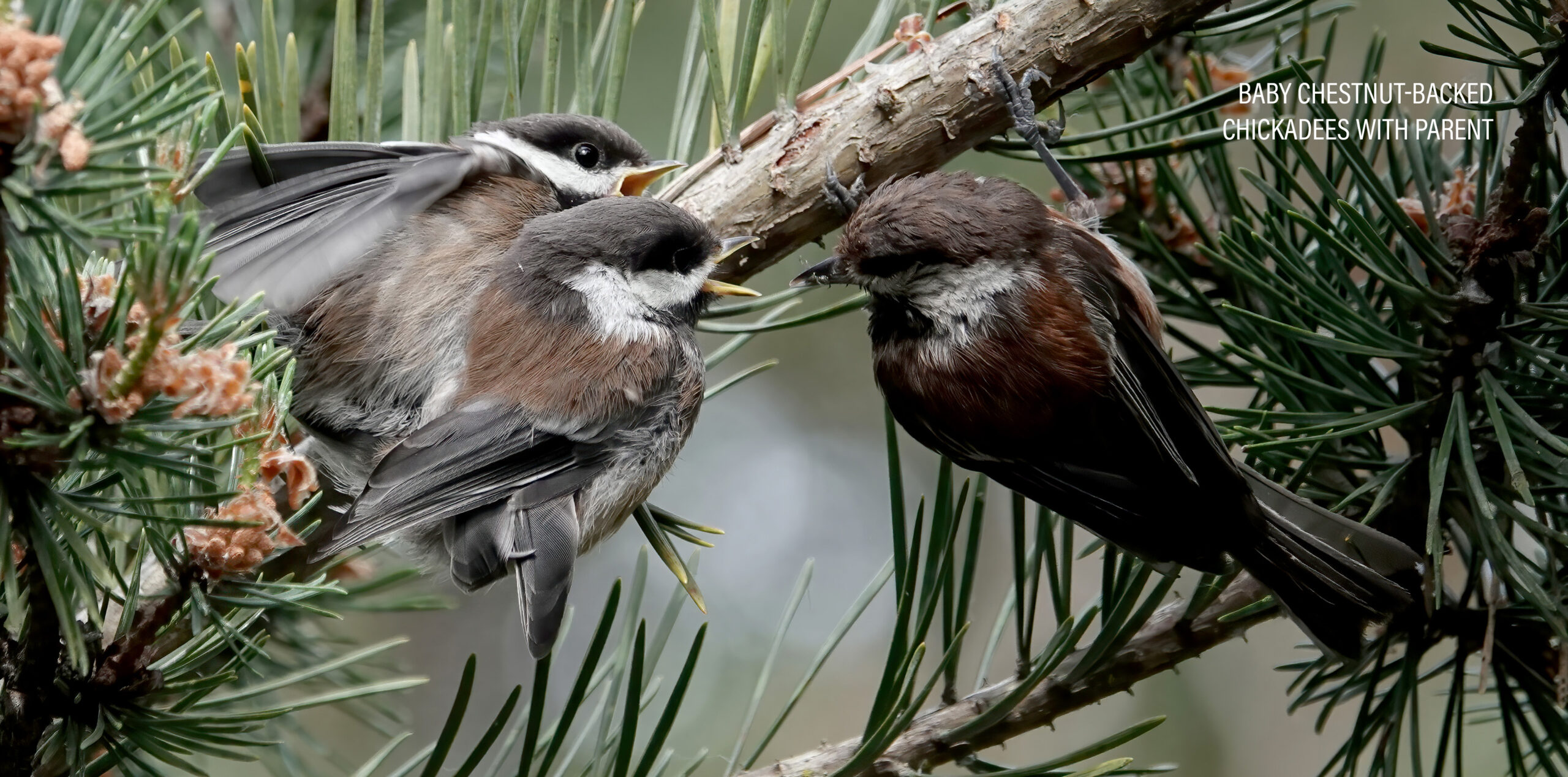
How can you tell if a bird is a baby? Since size isn’t a reliable feature, consider behaviour and appearance. A big clue is to see if the bird is being fed by another. While this can take place during courtship, begging with mouth wide open and wings twitching is a good indication that you are looking at a youngster. Behaviour of the parents will also signal that young are nearby. If you are being swooped on or yelled at by a bird, there is a good chance that you are close to a nest or a baby.
Look for differences in appearance, even if the size and shape are similar. For instance, young American robins are much more spotted than “teenage” and adult robins. Tails of songbirds are very short when they first leave the nest. Young birds might even have different-coloured eyes than their parents. Are you looking at a crow with blue eyes? It’s a baby! See a small bird with big “lips” (fleshy corners of the mouth)? Another baby!
Young songbirds must learn very quickly how to avoid predators, windows and other dangers. Their parents will feed them for a week or so after they are out of the nest, but then they have to find their own food. Without parental help, many will be flying south to their wintering grounds in just a few weeks, guided only by instinct, magnetic fields, and the stars. Safe journeys, little ones!