
Words Dr. Ashlee Albright, Peninsula Veterinary Hospital
As a veterinarian, it’s not surprising that I am a big fan of dogs! Dogs have enhanced my life through many life stages and I never feel quite complete without at least one hound by my side. In previous articles, we have discussed the physical and mental health benefits of canine companionship. We must remember, however, that dogs can react dangerously when they feel threatened, scared, hurt or angry. Many dogs are protective over people, places and things such as their owners, vehicles, homes, food and toys. Some dogs are also born with a strong prey drive, which can make them more likely to chase or attack small children.
While many of us have learned how to read canine body language by spending so much time living with the species, not everyone is so fluent. Individuals who are not exposed to dogs regularly can’t be expected to innately understand dog language. Children, who are most often involved in dog bite incidents, need to be given guidance on how to engage safely with dogs. Teaching children what to do when an unfamiliar dog approaches them off-leash could prevent life-altering injuries or worse.
Preventing dog bites starts at home, where it is important to give pet dogs a quiet area to escape to when they feel scared or overwhelmed. Dogs need a protected space to eat and sleep so that they won’t feel threatened or startled. When young children and dogs share space at home, baby gates are helpful to keep them separated at critical times like eating and sleeping, or when they cannot be directly supervised. It is never OK to let a toddler pull on a dog’s ears, hair or tail, even if the dog is gentle and tolerant. Studies tell us that dogs do not enjoy being hugged and they feel threatened with direct eye contact. Remember that any dog can bite if provoked or in pain. Assume that it will take a young child several years to learn how
to safely engage with the family dog.
Understanding dog body language is beyond the scope of this article because it is best taught using pictures, videos, and watching dogs in action. A good resource online is cattledogpublishing.com, which is a website dedicated to dog behaviour for pet guardians and animal care professionals.
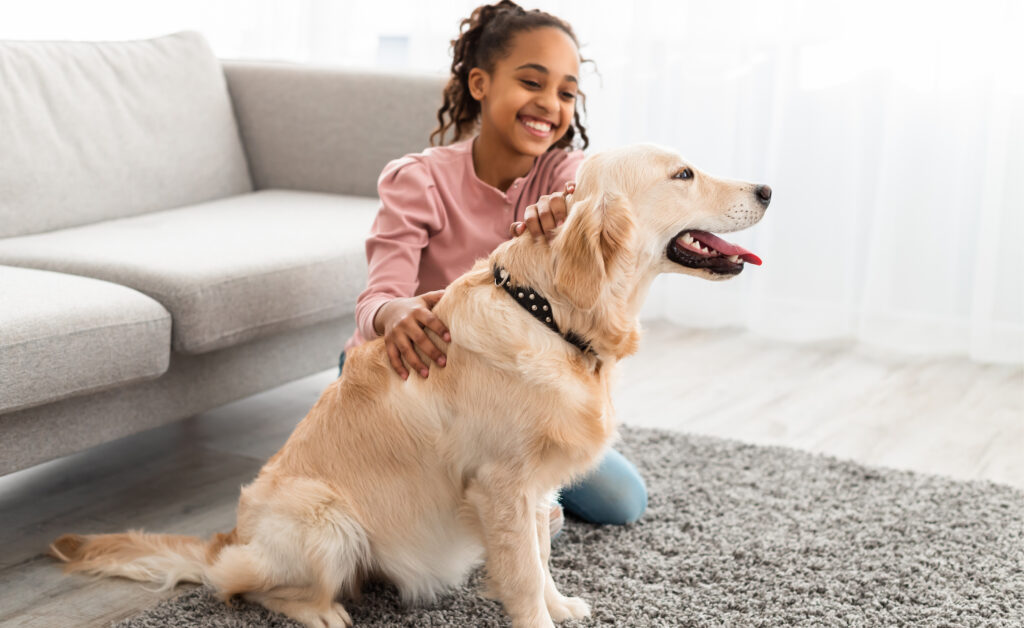
Children should be taught how to safely approach a dog that is on-leash, starting with asking the owner’s permission to greet their dog. If the answer is yes, the child should wait for the dog to approach them first. Turning their body slightly to the side or kneeling down to the dog’s level and avoiding direct eye contact is the polite way to greet a dog. Next, the child can hold out a hand in a fist and allow the dog to sniff it if they choose. Safe areas to pet an unfamiliar friendly dog are the chest, side, neck and back in a calm and steady manner.
Most children who encounter a stray dog react by screaming and running away. This response instantly leads to a potentially dangerous situation by triggering a dog’s instinct to chase. The safe way to behave around an unfamiliar off-leash dog is “like a tree.” This means that one should stand still with arms tucked to the sides and hands folded in front, while looking down. Practising this posture with friendly dogs can help build a child’s confidence and composure.
If a dog knocks you or a child down and starts to bite, the safest position to be in is “like a rock or a log.” While lying down, face the ground “like a log” or tuck your face into your knees and chest “like a rock,” clasp your hands tightly behind your neck, and wrap your elbows over your ears. This position protects vital areas and staying motionless and soundless will result in most dogs losing interest.
While most of us never expect to have a dangerous encounter with a dog, sadly this happens more often than we realize. The good news is that most dog bites can be prevented by understanding dog behaviour and body language and knowing how to safely engage with dogs.