Words Anny Scoones
Photo Sarah Graham
Are you looking for a healthy, creative and beneficial project to do this autumn and winter? One that gets you outdoors and provides numerous benefits to your health, property and to the natural world, plus helps mitigate climate change?
Whether your property is an acreage or a postage stamp plot or allotment, or even a balcony or patio, planting a natural (perhaps native) hedgerow, or hedge plants if land is limited, will reward you in spades.
Hedgerows are groups of various types of shrubs, wild flowers, thickets and trees originally planted together as natural boundaries and fences over the heaths and downs of the United Kingdom as early as 1235 to enclose grazing livestock.
In 1997, the U.K. restricted the removal of hedgerows with the Hedgerow Regulations Act, and in 2006, listed hedgerows as “a habitat of principal importance for biodiversity conservation.”
The benefits and advantages of hedgerows are vast.
A sturdy healthy hedgerow can serve as a wind break across your meadow or around your garden, the shrubbery in your hedgerow can absorb the winter rains and prevent flooding and a good hedgerow controls erosion.
A hedgerow is composed from a diversity of shrubs; creepers and climbers; bushes and briars such as twin berry, Nootka rose and ocean spray (to name only a few); and perhaps a variety of fruit or nut trees. It can provide birds, wild animals, bees, endangered species, beneficial insects and butterflies with habitat, shelter, food sources and nesting sites. You can even enhance your hedgerow with bird houses and other manmade housing and feeding stations for a variety of animals. Beneficial (and harmless) snakes prefer rock piles in the shrubbery and many useful insects love wood piles, especially decomposing woodland debris; “nurse logs” are logs and wood left to decompose and become “nurses” for other creatures and vegetation to live in and feed from. The hedgerow, apart from a little tidying up occasionally, requires very little maintenance – fallen leaves, twigs and old foliage are useful as a natural mulch.
Does this not sound more fun, creative, inspiring, attractive and practical than installing barbed wire or very expensive post and rail?
You might like to consider native plantings which suit our climate and natural fauna species; these native shrubs can often tolerate our dry summers and do well in our mild winters.
My favourite is the red flowering currant (it also comes in white) and the mock orange has a glorious fragrance and delicate blossoms.
Our native flowers which can be scattered into or around your hedgerow have charming names – pearly everlasting, sea coast Angelica, and Pussytoes.
Before you plant your hedgerow, sit down with paper and a nice pen on a stormy autumn evening and plan out a few details – the planning is one of the most creative and stimulating parts of the project. Think about where the hedgerow would benefit you and your property and the environment the most – do you have an erosion issue or any pooling? Do you like to attract birds and beneficial insects? Do you need a windbreak? Perhaps your children or grandchildren would like to create their own little ecosystem (for fairies?).
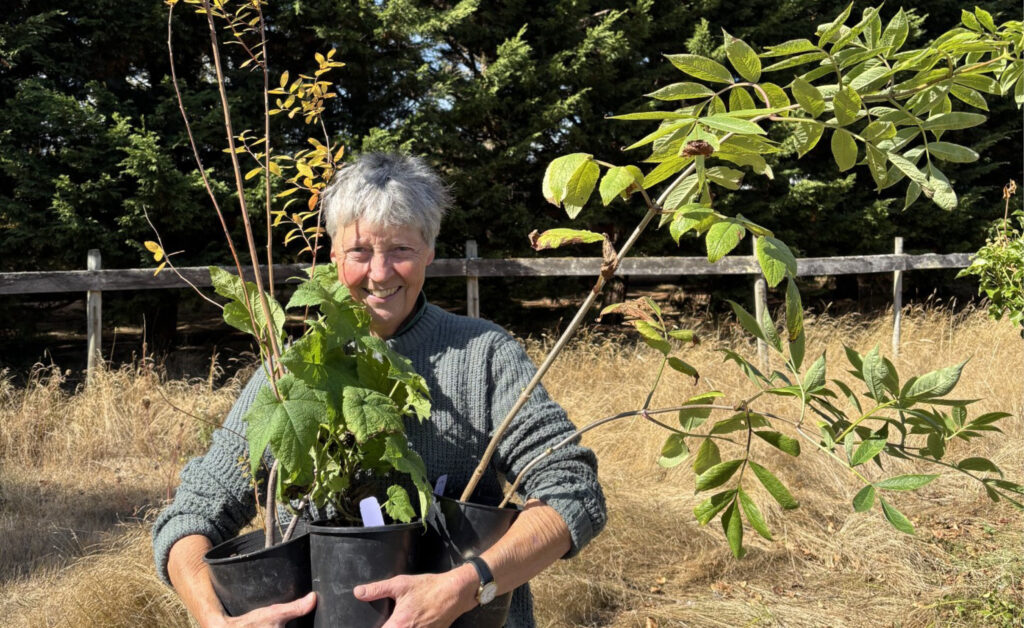
Get yourself a good spade and gloves and wait until a bit of rain falls for easy digging. Start with the gallon pot plant, which is a do-able sized hole to dig, and research the directions as to what the plant likes to help it thrive.
There are several plant nurseries on the Peninsula that sell native shrubs; make a day of it and check them out. Satin Flower Nurseries specializes in only native shrubs, flowers and trees. They have a wonderful informative website to scroll through and you will learn all about the many various and diverse choices for your hedgerow.