Words & Photos Stephanie Staples
I’ve been trying to get in for years. Just up-Island in Duncan, it’s a busy place, a popular place – and a very, very quiet place.
When I finally got in, and realized it coincided with my 60th birthday, it felt meant to be. I would be completely off the map as I attended a 12-day Vipassana Silent Meditation Retreat.
My excitement lasted about five minutes before morphing into full-blown anxiety. I literally talk for a living – how on earth was I going to be silent for 10 days in a row?
And sitting still for 10 to 14 hours of meditation a day? I’m one of the most active people I know. Add in no reading, no writing, no exercising and no eye contact, and I found myself thinking “Good Lord … what have I signed up for?” I quietly hoped for a speaking engagement that would force me to cancel this whole crazy idea.
But the pull was strong; something in me wanted this experience. As the date got closer, my fear softened into cautious optimism. I reminded myself that this technique has worked for hundreds of thousands of people over thousands of years – even in prisons. I decided to trust the process.
I packed. And packed. And packed. I’m the woman who once did two weeks in Europe with a carry-on and often travels for work with just a backpack, but not this time. I nearly needed a donkey.
Bolster, pillow, blankets, shawl, meditation bench (which required a YouTube tutorial) … all carefully added to a very large suitcase. As I packed, I coached myself:
- Do not sneak in snacks – you only get tea and fruit for dinner. Follow the rules.
- Do not sneak in your journal, pen or exercise band. Follow the rules.
- Trust the process.
Trust. The. Process.
Once I arrived, I realized I’d been focused on the wrong thing. I was so worried about logistics that I forgot the most important part: this is a course. A literal 12-day training designed to teach one very specific meditation technique: Vipassana. Every rule and routine exists to remove distraction so you can focus and learn.
I slipped into the monk-like lifestyle surprisingly quickly – though I did catch myself reading clothing tags and fire-extinguisher labels (it needs to be changed March 3, by Ross, in case you’re wondering) in desperation for mental stimulation.
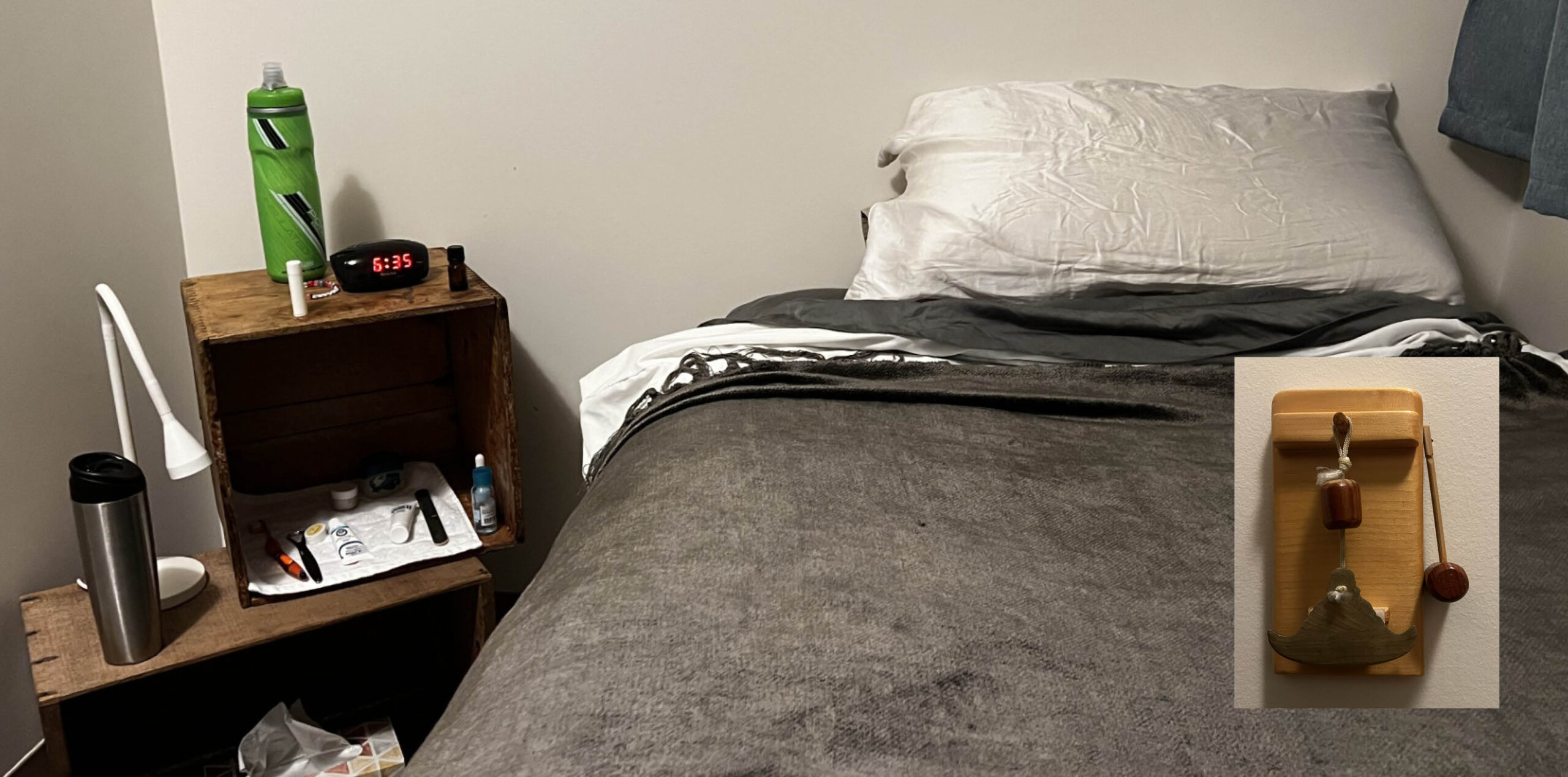
A beautiful Burmese gong woke us at 4 a.m. and marked the start of every meditation and meal. The days were full in a simple, repetitive way: meditate, eat, rest, shower, walk – repeat. Twice a day you could ask the teacher questions. Otherwise, it was deafeningly quiet.
I counted the days by balling up paper towels. It didn’t matter what day of the week it was, but it mattered to me not to lose track. I arrived on a Wednesday; four paper balls later, it must be Sunday.
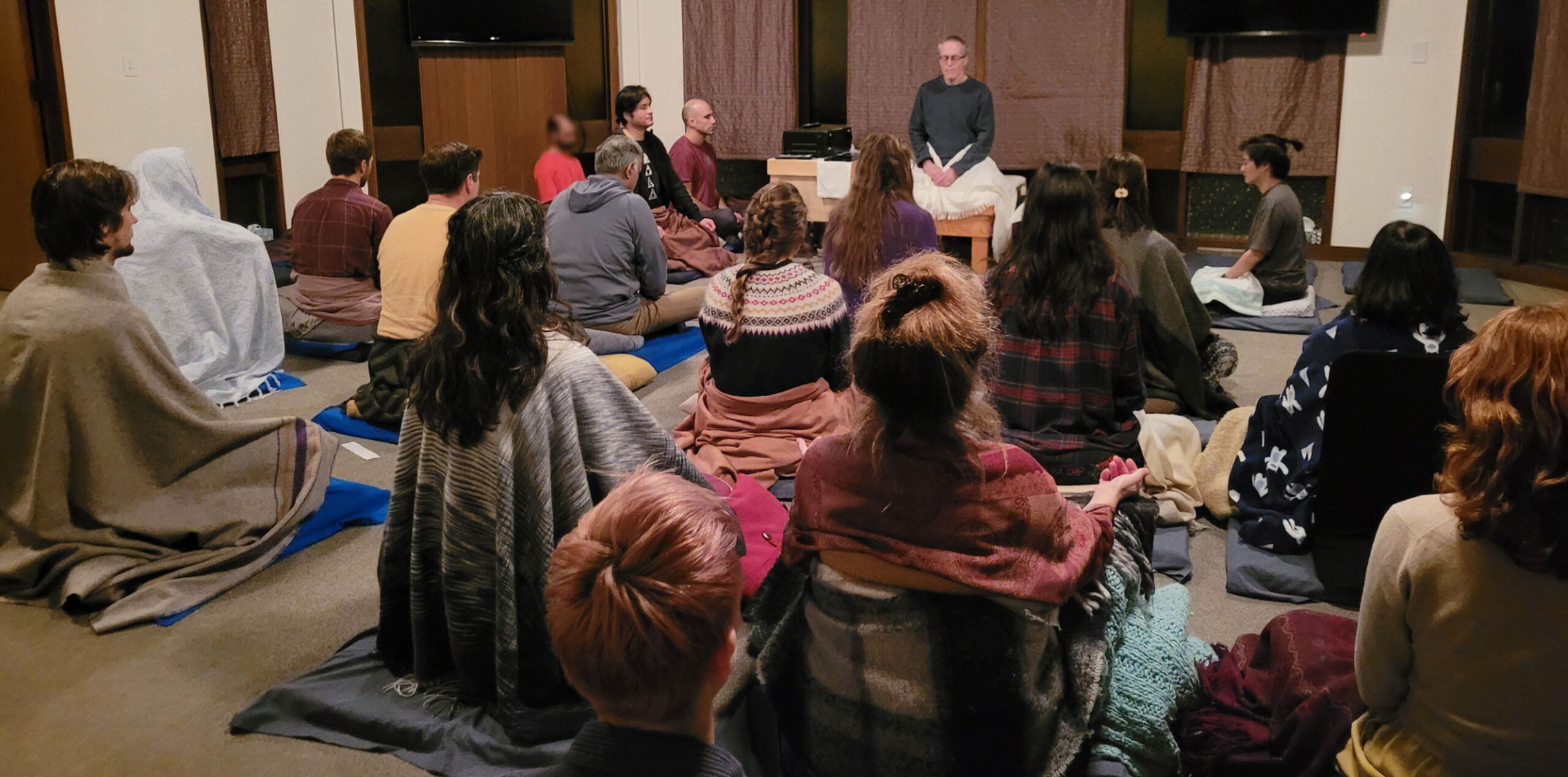
There were 25 people in my course. Men and women were separated. Only one person left early.
My daily walks changed dramatically. At first, I speed-walked, thinking, let’s at least get some steps in – though without a watch or phone, that concept quickly became irrelevant. As the days passed, I walked slower and slower. I could hear deer pulling leaves off bushes and chewing them. I swear I could watch mushrooms grow. Eventually, I was zig-zagging down the well-worn path like a skier just to go slower. It was magical.
The vegetarian meals were healthy and hearty, prepared and served by volunteers who had benefitted from previous courses. Eating silently with others – no conversation, gestures, or manners – was surprisingly difficult. Ironically, we weren’t looking at our phones, yet we still couldn’t really look up.
Though the retreat was silent, my mind was anything but. Breathe. Breathe. Shut up, mind. This is hard. So hard. I laughed, thought, planned, cried … and started again.
Three times a day, we were asked not to move for a full hour. Strong determination was required. Tears rolled down my cheeks. I didn’t wipe them. I stayed still. Letting tears fall without reacting was one of the strangest experiences of all.
As the days passed, insights emerged: the impermanence of everything – both good and bad – and the surprising control we have over our own happiness and suffering. When silence ended, it was clear everyone had been on a deeply personal journey.
Vipassana, which means “to see things as they really are,” is one of India’s most ancient meditation techniques. It’s offered worldwide, entirely by donation, and run by volunteers. If you don’t complete the course, they won’t even accept a donation. If it helps you, they encourage you to return as a server.
If you’re curious about this very unique, experiential and potentially life-changing course, visit www.dhamma.org.