

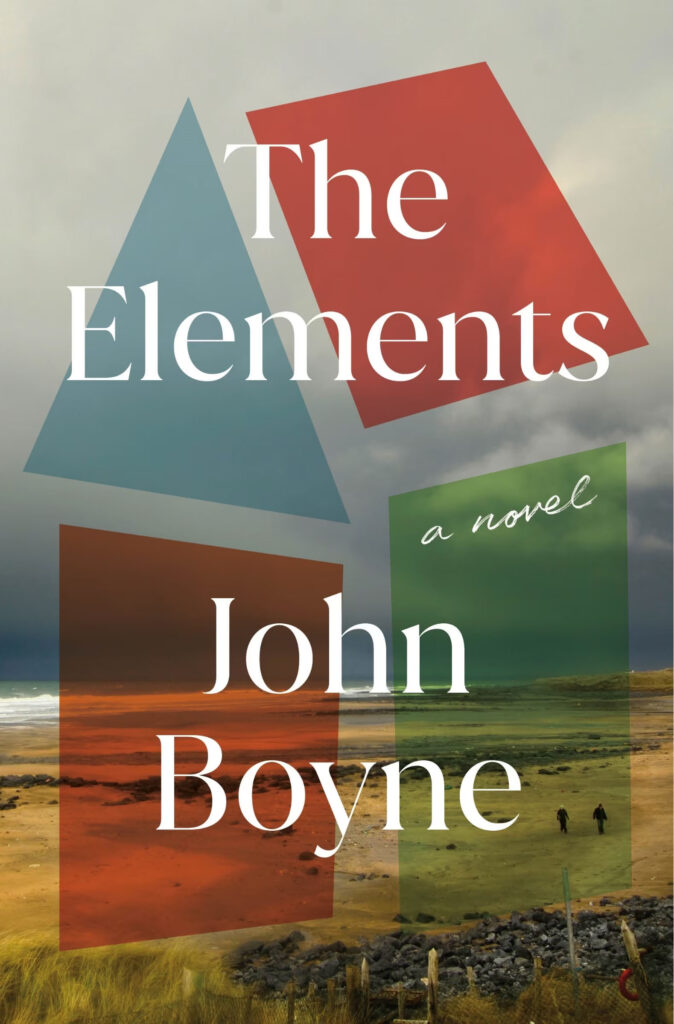
Words Jackie LaPlante
A friend once said she couldn’t trust anyone who didn’t read fiction. When I asked why, her response was that fiction teaches us how to live. Meeting a character can remind us what others face.
John Boyne’s The Elements asks the reader to consider crime from four perspectives: the enabler, the accomplice, the perpetrator and the victim. The four linked novellas are named for the classical elements, and the characters are cleverly connected.
“Water” follows a woman whose husband has been convicted of a crime. She retreats to a small Irish island to explore her unwitting, perhaps unconscious, facilitation of the incident. The peripheral trauma experienced by her daughter will surface in “Air”.
“Earth” sees a young athlete leaving home, confronting his own sexuality and the extent of what he will do for love as he is drawn into an assault perpetrated by a teammate. Finally, in “Fire,” a successful surgeon’s childhood trauma becomes the catalyst for her own criminal activity.
This all sounds very grim, but Boyne keeps the crimes themselves off the page, concentrating on developing characters in ways that provoke the reader to examine their own responses to the crimes. Yes, an adult who preys on children is a monster. And of course, his spouse should have known – but would we be willing to blind ourselves if voicing concern may jeopardize a beautiful life? And yes, predation is a crime, but what if that perpetrator was, themself, a victim of unforgiveable crimes in youth? And if that perpetrator is a woman?
Boyne artfully adds little surprises about each character so that just when the reader has assessed the character, there is a twist that causes reconsideration. The timely snippets of information give the novel a thriller-like readability, yet there is still scope for the reader to make thoughtful connections with the characters, and to assess them as human beings, no matter their culpability in their own stories.
Boyne’s strength is that each character finds a redemption that suits their situation – a promise to the reader that there is scope for all of us to find the same.
The three books below lead their characters to eventual self-understanding. From a Chinese Vancouverite’s WWI experience, to a creative but honest documentation of Elsie Jane’s grief to a woman’s journey through mental illness, buoyed by the tough love of her family, these are stories where the reader can develop with the character.
1. The Riveter by Jack Wang
2. What Remains of Elsie Jane by Chelsea Wakelyn
3. Sorrow and Bliss by Meg Mason

