
Words Stacey Toews
This winter I’ve been dreaming and scheming on the evolution of our gardens. This winter on our property, I’m planting holly for seasonal colour and habitat, a few haskap and some additional fruit trees, along with self-fertile kiwi vines for a sunny trellis, and earmarking an area for future Christmas trees – likely noble fir. I’m also starting grape cuttings in half wine barrels, so they’ll have a head start when spring arrives. These projects all have one thing in common: January through March – while plants are dormant – is an ideal window for transplanting and establishing perennials and woody plants with minimal shock.
For transplanting perennials, timing is everything and the time is now! When plants are leafless and dormant, their energy is concentrated in roots rather than top growth. Moving them now reduces stress, minimizes water demand and gives roots time to settle before the surge of spring growth.
So, with those thoughts as inspiration, here are 5 steps to successful winter transplanting:
Make Your Wish List
Decide what you want to source or relocate. Try to learn about the varieties that will be best suited in our region/growing zone along with any possible pollination needs. Do your best to suss out the perennial’s size at maturity and its best purposes (e.g. visual screen, fruit harvest, cut foliage).
Match Each Plant to Location
Map sun exposure, soil type, drainage and wind. In the instances of the plants which I’ll be “importing” to our place … kiwi and grapes want warm, sunny sites with strong support; haskap tolerates cooler spots and needs room to be planted in groups for pollination; holly likes partial sun and shelter for a good berry set while the future Christmas trees will treasure well-drained sites to root well.
Prep the Plant for Moving Day
Prune thoughtfully while plants are dormant: remove dead wood, thin crowded stems and reduce height to balance root loss. If you’ve ever seen an orchardist prepare a fruit tree for moving day, you’d think they were committing a crime with their pruners for the vast amount they remove from the tree. It’s OK – it’s easier for the plant to make the move when it takes less “baggage” along!
Prep the Planting Site
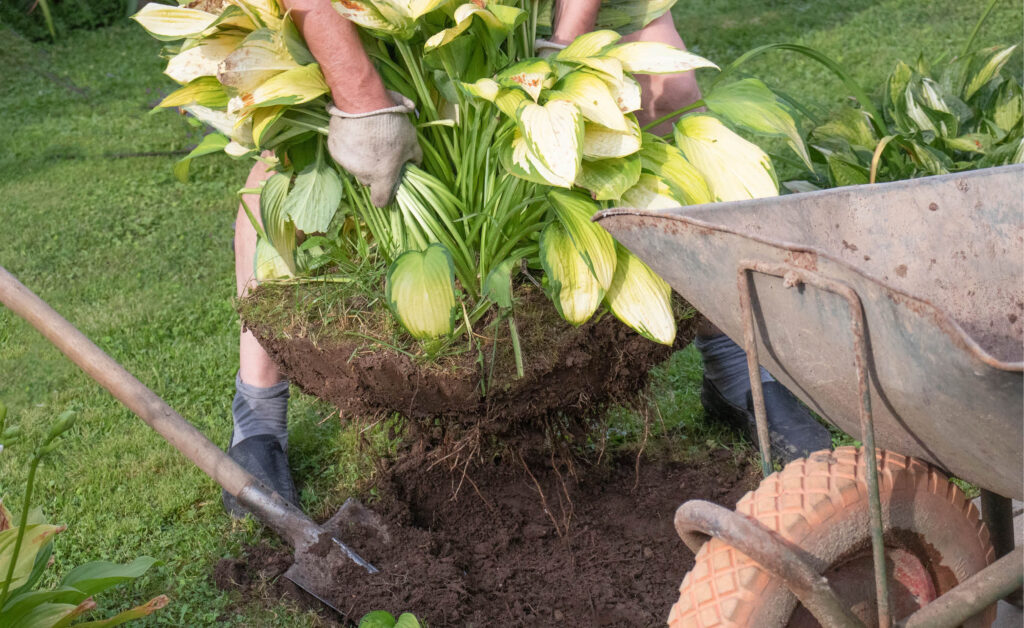
Dig a generous hole – ideally make the width of the hole two times the root ball and the depth the same as the roots.
The two keys I recommend are: 1) loosen the surrounding soil of the hole before placing the roots into the hole so that roots can easily extend laterally and 2) mix in well-rotted compost to improve structure and nutrients.
Two keys to avoid are:
1) sinking the roots too deep into the hole and 2) over-fertilizing the new site with more nutrition than is healthy for the newcomer.
Also, good drainage is essential: if the hole fills with water, amend the soil or raise the bed slightly.
Finish Strong
Stake tall or top-heavy transplants (kiwi vines, young trees) to prevent wind rock. Apply several inches of mulch (leaves, clippings, bark chips) to conserve moisture and moderate soil temperature. Be sure to note how you’ll handle irrigation once leaves flush.
I dare you to take a few photos on transplanting day so that in the future you can look back (and brag!) to note what a great moving day that was and to see the progress over time that makes perennials such a wonderful investment in any yard.
Try to be both expectant and patient … plants may look slow to respond, but their roots are quietly reconnecting. Be assured, your thoughtful efforts now will pay off with explosive, healthy growth come spring.
Happy transplanting and enjoy the head start!
Please follow Sustainable Stace on Youtube or IG for more gardening ideas, or email sustainablestace@gmail.com with questions!