
Words & Photos Stacey Toews
It’s Like a Veggie RRSP! Imagine YOUR garden as a place with fresh asparagus every spring!
This article is meant to help you make that into a reality. Asparagus is like a veggie RRSP: get it started with a few strong contributions, and you’ll have decades in the future to experience and share the reward.
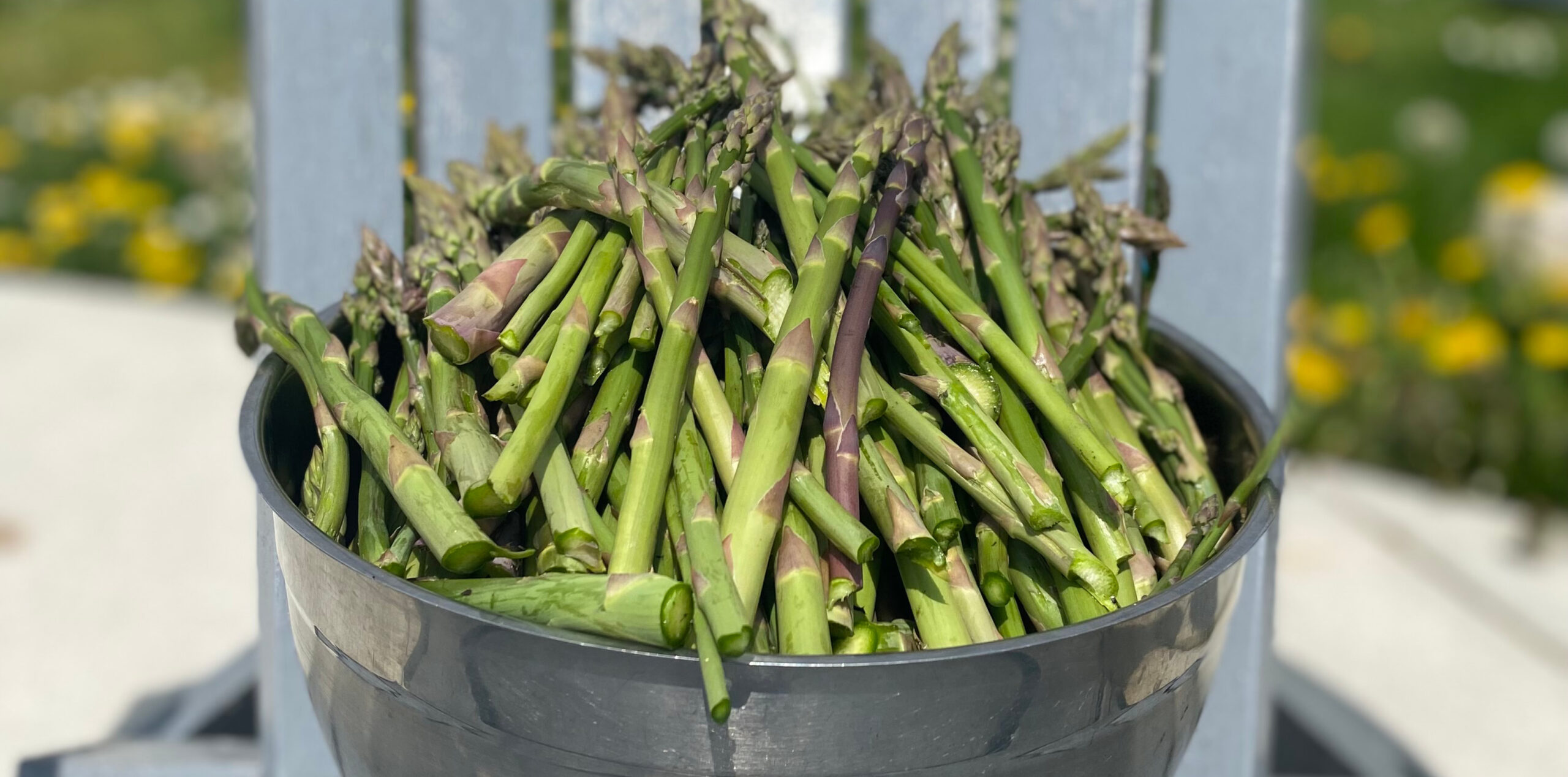
Asparagus rewards patience. Plant it once, care for it well and it will produce for many years. Each year, our family enjoys – and shares – fresh asparagus throughout May and June.
New to asparagus? Think of it like the rhubarb of vegetables. It disappears underground during the dormant season, then comes back strong and early each spring.
15 years ago, I planted 50 asparagus crowns and I’ve never regretted it. Crowns are established root systems that give you a significant head start over planting seeds.
The key is to plan the bed properly before you buy crowns – and to understand that you’re planting for the long term.
Here are the steps you need to follow:
- Select a Location
- Dig a Trench
- Plant & Cover Crowns
- Wait … Enjoy
Start by choosing a permanent location. Designate an area one metre (three feet) wide and make it as long as you can reasonably spare. Allow 16 to 18 inches per crown, so a 12-foot bed will hold eight or nine crowns.
Pick the sunniest spot you have. Asparagus needs maximum sun exposure to grow strong ferns after harvest, which feed the crowns for future years. Avoid areas with invasive tree roots, heavy competition from shrubs or boggy spots where water pools during the rainy season. Good drainage is essential.
In February to March, depending on the weather and soil conditions, dig a trench that’s 8 -10 inches deep and the same width in the centre of your designated asparagus patch. Then you’ll be ready when crowns become available!
For sourcing crowns, look for reputable garden centres. Wildwood Outdoor Living Centre (near Saanich Commonwealth Place) is a good place to check for asparagus crowns in March. Buy firm, healthy-looking crowns and plant them promptly.
In our area, Mary Washington is a dependable heirloom variety. It’s a great choice if you want a reliable, classic green asparagus.
On planting day (trumpet blast!) improve the soil at the bottom of the trench with compost or well-rotted manure, then create a small mound along the bottom of the trench. Lay each crown on the mound with the roots spread gently outward, spacing crowns about 16 to 18 inches apart. Cover with a few inches of soil at first, then gradually fill the trench as shoots grow.
After planting, keep the bed moist and control weeds. Mulch helps conserve moisture and reduce competition.
The hardest part is waiting. Do not harvest in the first year. In the second year, take only a light harvest. By the third year, your asparagus bed should be ready for a proper spring harvest and your veggie garden will move up a few notches in status.
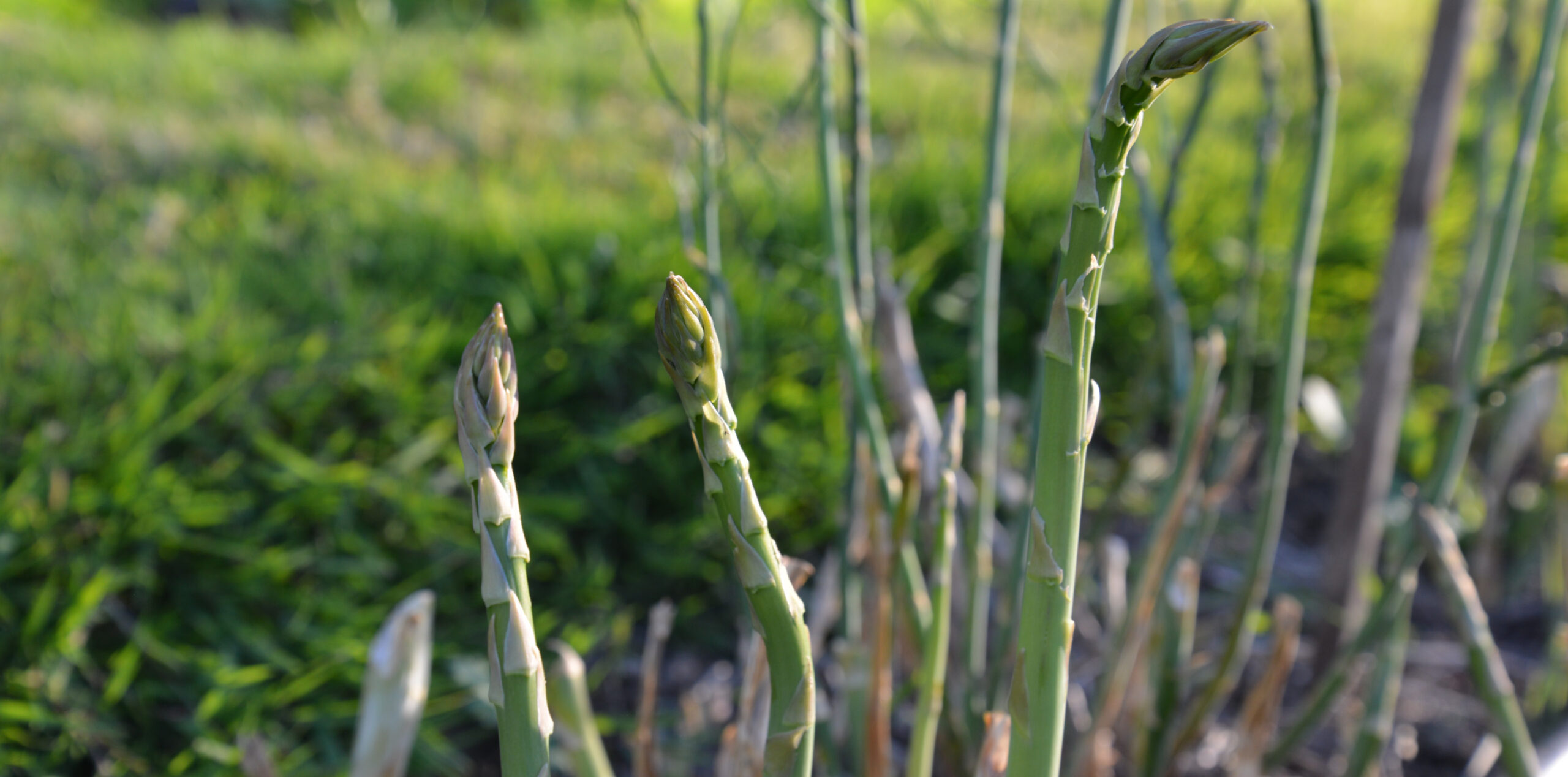
Harvesting is simple. You can use a small knife to cut spears at soil level or just bend them near the base – they’ll naturally snap at the right point. Once you get the feel for it, it becomes a quick and satisfying routine during the season. This season, our spears grow three to four inches in a day!
After harvesting – usually concluding late June – let the remaining stalks grow freely. They’ll shoot up to four feet tall, forming airy, fern-like growth covered in tiny flowers that attract pollinators. This stage is important: it allows energy to move back into the root system, strengthening the plant for the following year.
Once the foliage has turned brown and brittle, cut it back at soil level.
At this point, in prep for each winter, I top dress with two to three inches of soil or compost, then cover the area with cardboard and coffee sacks to keep it insulated through the colder months. In early April, I remove the coverings to let the new shoots emerge. This simple routine has kept the bed productive year after year.
With planning and patience, asparagus becomes one of the most rewarding crops in the garden – quietly doing its work underground, then showing up each spring right when you crave it most.
You can follow me on Youtube @SustainableStace