
Words & Photos Tina Kelly
After a rain, two different rainbows can appear. One evokes a sense of awe and jokes about pots of gold. The other should trigger a sense of ewww and conversations about the environment. The iridescent rainbow of the latter is the shimmer of pollutants on roads, parking lots and driveways.
Where does oil, gas, sediment and trash go? All of this is washed into waterways – streams, rivers, lakes and ocean. The amount of chemicals entering the water from paved surfaces can be decreased with smart stormwater management. Rain gardens are a type of green infrastructure that can mitigate stormwater issues, including reducing the pollution load on salmon and other aquatic life.
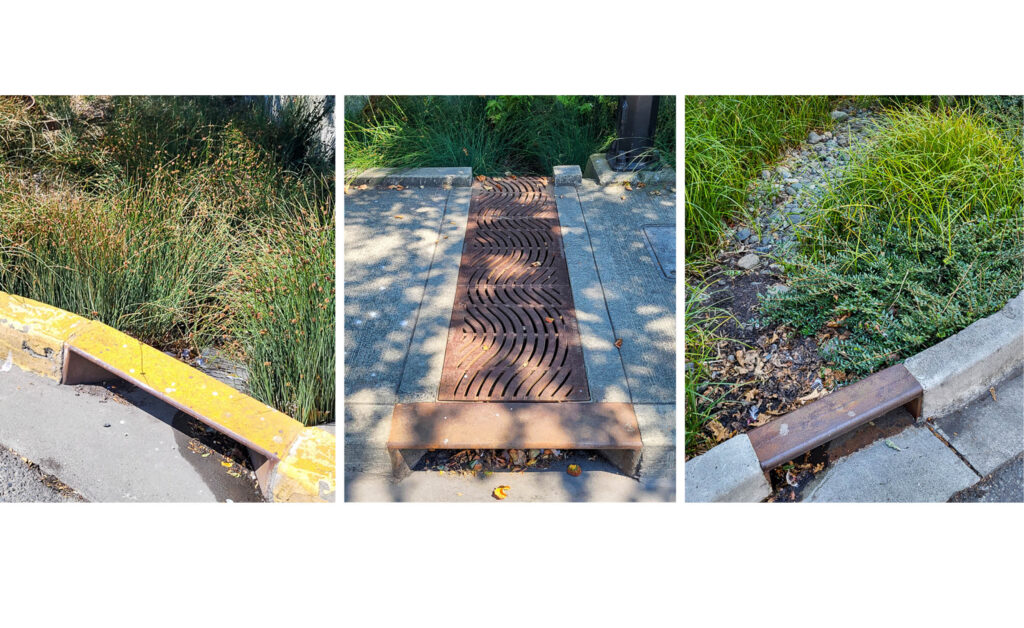
Rain gardens are low depressions of soil planted with vegetation (ideally native plants) strategically placed to capture water draining off hard surfaces. The diverted water is naturally filtered by the porous garden.
It’s not just pollutants that negatively impact the health of our waterways: it’s also the speed and volume of water. As cities and their concrete nature expand, more and more water needs somewhere to go. Heavy rains rush off pavement directly into the water, or is channeled by other hard surfaces or pipes, to the water. It can overwhelm storm drains, and for a river or stream, receiving the intense flow equates to being hit with a firehose. The result – erosion and degradation of salmon habitat. Rain gardens capture and slow down the water; add erosion and flood prevention to the list of rain garden benefits.
Curb cuts allow water to move from roads or parking lots to a garden. Just as it sounds, a curb cut is a hole cut in a curb. There are at least eight curb cuts within four blocks of my city home, outside newer builds. Perhaps developers are becoming more progressive, or maybe they take advantage of the financial benefits. Rain gardens are so impactful for stormwater management, some cities and municipalities, like the City of Victoria, offer incentives and rebates for installation.
Next time you’re at the Victoria Airport, look around the parking lot. They have implemented a great amount of rain garden infrastructure on the property. In Sidney, curb cuts are now in place on Galaran Road and more are planned for the Beacon Avenue West neighbourhood. It’s a start.
When water is allowed to hit natural spaces like gardens instead of rushing through culverts or drains, groundwater is replenished. And replacing some heat-absorbing pavement with rain gardens cool urban spaces, an important task as our climate changes.
One additional perk: these green pockets welcome birds, bees and other pollinators to urban spaces. While out in my neighbourhood, searching for this infrastructure, I spotted juncos and sparrows utilizing these small oases in the city.
The rainy season is coming. Smart stormwater management is green, not gray. Engineering solutions can be as easy as a well-placed garden.