
Words Jackie LaPlante
I have been a member of one or more book clubs for 27 years. They have differed in format and membership criteria, but what they had in common was that group discussion enhanced nuances of the book, highlighted what others had found interesting, and led to fascinating sidebar conversations.
In one of the book clubs that I currently belong to, books are suggested by members and chosen democratically. We deliberately create a diverse list that comprises all genres. Of course, the choices reflect member preferences, from pet topics to favourite authors.
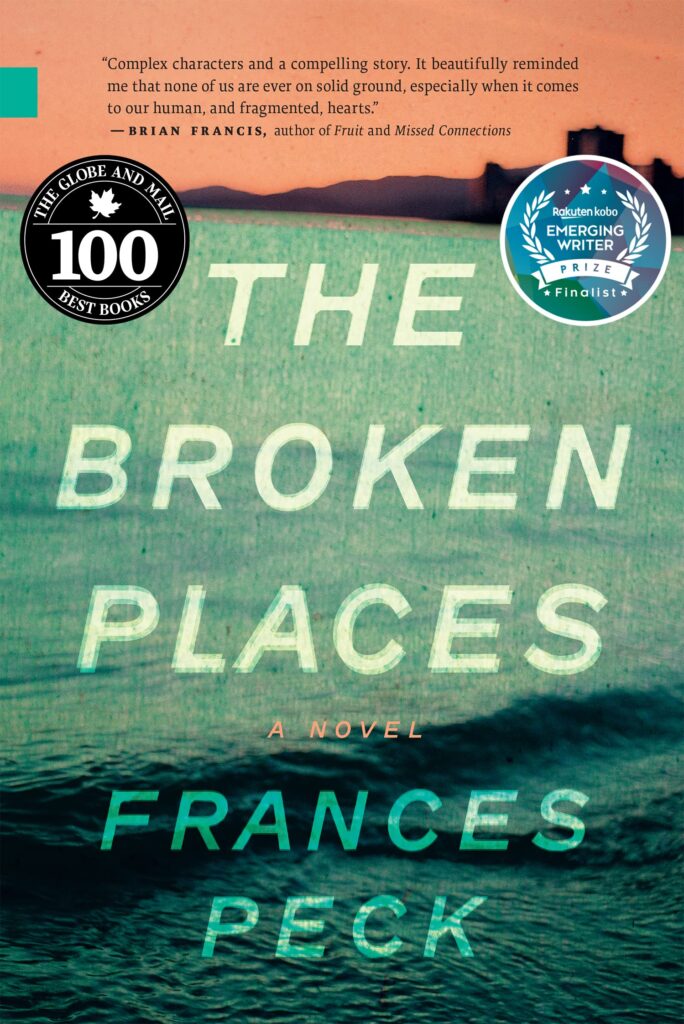
One member has a penchant for books about disasters and plagues, so it was no surprise when The Broken Places by Vancouver author Frances Peck showed up on our list.
Beginning on the day that a severe earthquake rocks Vancouver, a cast of not particularly likeable characters moves from going about their days to working to survive. The earthquake is a catalyst for exposing the broken places in people that may be revealed in desperate times. Occasionally, those broken places become stronger than they previously were.
As we reviewed the backstory of each character and then discussed their post-disaster reactions, initial dislike of the characters softened as we connected them to types of people we know. A teenaged character, well-trained in earthquake protocol (prompting memories of school earthquake drills in B.C. in the 1970s) was one of those who reacted courageously and emerged stronger.
Frances Peck’s descriptions of the disaster felt realistic and led to interesting tangential conversations. Initial jokes about go-bags and how outdated our respective earthquake kits are morphed into members sharing their personal fears about being in a disaster – safety of pets, reconnecting with loved ones, ability to react appropriately – and one member recounted her own experience of a severe earthquake in the Pacific Northwest and how it shaped her preparedness and mindset for the future.
Each of the characters in The Broken Places harboured a secret – their broken place – that directed their response to the quake. As we discussed how their actions affected our admiration of them, we explored whether we, too, have things we should reconcile lest we find ourselves similarly tested. The book prompted reflection on a scenario that is a real possibility in B.C.
While I could list the other disaster and plague books read in my group’s 10-year history, I will, instead, offer titles that were catalysts for wide-ranging discussions:
- All the Beauty in the World by Patrick Bringley
- The Black House by Peter May
- The Claws of the Panda by Jonathan Manthorpe