
Words & Photos Stacey Toews
As the summer garden winds down, there is still something wonderful to plant. Garlic is a promise tucked into the soil: one clove now; a whole bulb next summer. It takes surprisingly little effort to get started, and you do not need a huge garden. A small patch of healthy soil can yield plenty of flavour for your kitchen.
On Timing and What to do When …
Most garden crops of lettuce, kale, potatoes, beans, tomatoes or peas will have wrapped up their harvests in time to use the space they had occupied as your garlic bed.
It’s in late October or the first weeks of November that’s best for Vancouver Island garlic planting, with harvest following in June or July. The cloves spend roughly eight to nine months in the ground, quietly getting ready for their big finish.
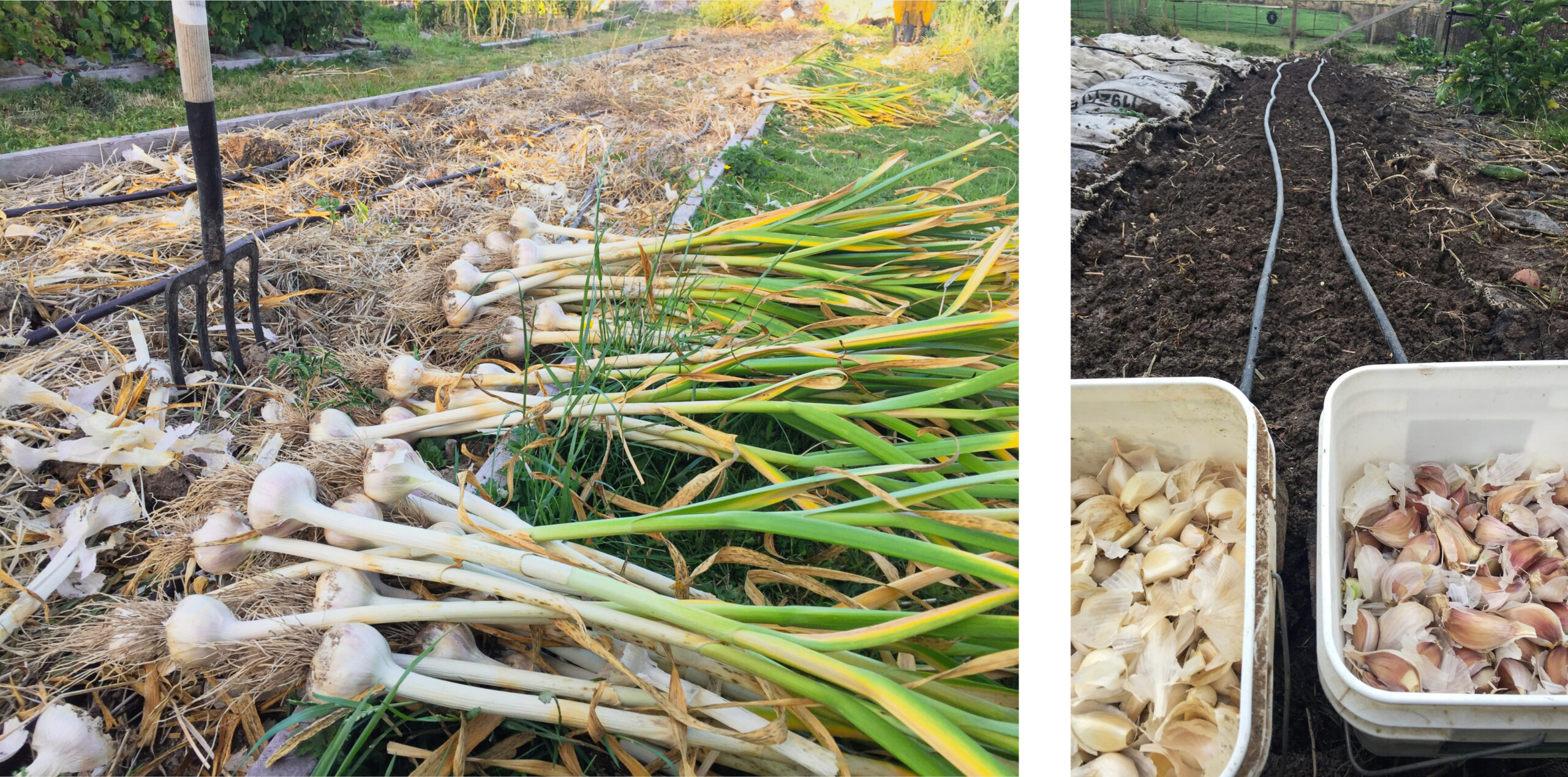
I plant my garlic in double rows on either side of a drip line so that when things get dry and warm and the garlic is most in need of moisture to finish maturing (May/June) I can turn on the drip lines and target the roots with water.
The early garlic is generally sprouting above soil as early frosts show up and that’s a great time to put mulch of grass clippings, straw or rolled up coffee sacks between rows to insulate, suppress spring weeds and hold moisture.
Start with Your Best Garlic
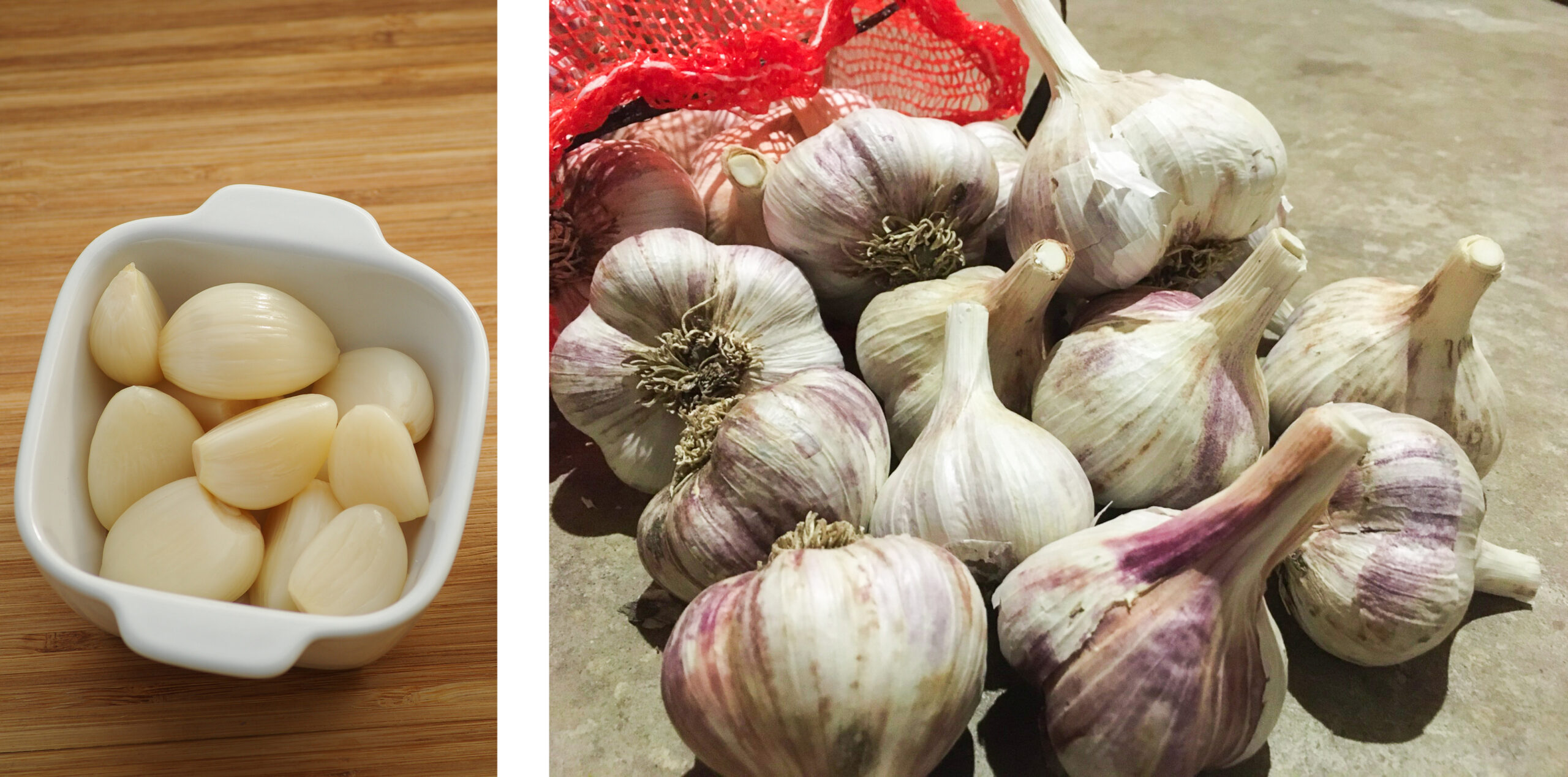
I grow about 1,000 bulbs each year, saving the biggest, healthiest specimens for replanting. The medium ones are sold, and the smaller ones feed our family. Even those are often golf-ball sized! Selecting good planting stock is the beginning of next year’s harvest.
If you are buying garlic to plant, look for healthy seed garlic from a reputable grower. I also like growing more than one variety. In my garden, that includes hardneck and softneck garlic.
Planting a couple suited to your conditions spreads the risk and lets you discover your favourites.
Do not worry if one variety emerges or grows more slowly than another. They have their own pace.
Plant Your Garlic: Six Simple Tasks
Once you have prepared your growing space, planting is straightforward:
- Choose a sunny spot. Garlic needs fertile, well-drained soil. A raised bed works well. Containers are another option, although they need extra attention to winter protection in cold climates.
- Prepare the soil. Loosen the planting area and incorporate finished compost where needed. Give roots a welcoming home without waterlogged conditions.
- Separate the cloves. Break each bulb into individual cloves, keeping their protective skins intact. Choose firm, healthy cloves for planting.
- Plant the right way up. Place the root end down and the pointed tip up. There is no need to sprout cloves in water first; I prefer planting directly, avoiding unnecessary handling of delicate roots and shoots.
- Give them growing room. Leave approximately six inches, or 15 centimetres, between cloves. Picture each one becoming a mature bulb and resist the temptation to squeeze in more.
- Cover and protect. Nestle the cloves into the soil and cover them, following planting-depth and winter-mulching recommendations for your climate. The rows need not be perfectly straight!
Make a Little Space Go Further
If you’re wondering how much space you might need for your garlic, consider this: 50 to 60 cloves can fit (with adequate spacing) in a row that’s 12 feet long. That’s four or five cloves per foot!! In a bed that is 10 to 12 feet in length, that double row is usually 120 cloves (future heads) of garlic. That is a lot of future flavour from a bit of garden and one short gardening session!
Give Spring Growth a Helping Hand
When spring growth begins, attend to nutrition and keep weeds from competing with your garlic. Hardneck varieties offer a delicious bonus before the bulbs mature: tender garlic scapes for the kitchen.
Later, save your best healthy bulbs to plant again. For now, start with a few good cloves and a prepared patch of soil. You do not need to plant 1,000 to enjoy the satisfaction.
A modest autumn planting can become a generous summer harvest, and another step from being veggie curious to veggie confident. Nature is generous. Let’s give it something to work with.
Follow Sustainable Stace on YouTube or IG for more gardening ideas, or email sustainablestace@gmail.com with questions!